
From APC governors to grassroots mobilisation in Kaduna and the Niger Delta, the race for 2027 is already taking shape.
ABUJA — President Bola Ahmed Tinubu may currently be thousands of kilometres away from Nigeria on a three-week European leave, but back home, the political machinery around his 2027 re-election bid is already shifting into a higher gear.
From a meeting with all 31 APC governors at the Presidential Villa to fresh grassroots mobilisation in Kaduna and across the Niger Delta, the ruling party is increasingly moving its focus from Abuja’s political corridors to the communities and polling units where the 2027 contest will ultimately be decided.
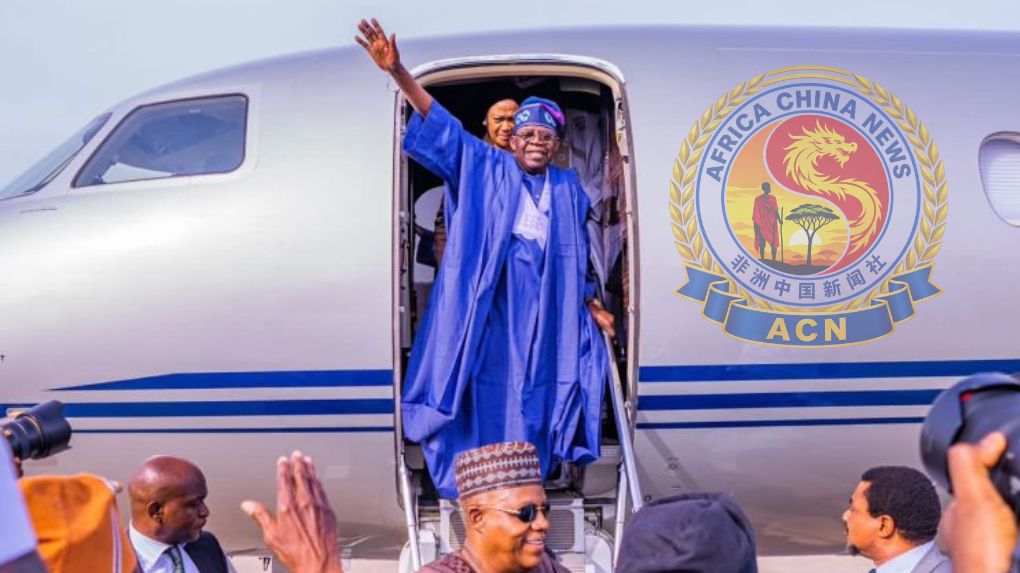
Tinubu departed Abuja on August 30 for a three-week vacation as part of his annual leave, with the Presidency saying he would return to Nigeria after the working vacation. Channels TV also reported that the President’s return is expected ahead of the 2027 election campaign.
But his absence has not stopped the political activity surrounding his second-term bid.
31 Governors Around One President
On August 27, Tinubu met with all 31 APC governors at the State House in Abuja under the Progressive Governors’ Forum.
While the initial report said the agenda of the closed-door meeting was not immediately disclosed, subsequent comments from APC leaders made the political significance clearer.
Imo State Governor and Chairman of the Progressive Governors’ Forum, Hope Uzodinma, said the APC governors were united behind Tinubu’s re-election and expected to play a major role in delivering support at the state level.
That matters because Nigeria’s electoral politics is heavily shaped by structures outside Abuja.
Governors control powerful state-level political networks, while local government, ward and polling-unit structures determine how effectively a party can translate national popularity into votes.
The APC therefore enters the 2027 contest with a significant organisational advantage — at least on paper.
But 31 governors do not automatically equal 31 states’ votes.
The real test will be whether the party can convert political structures into voter support.
Kaduna Shows Where the Battle Is Moving
One of the clearest signs of this strategy is emerging from Kaduna.
On September 6, the Kaduna State APC Consensus Aspirants Forum announced its support for Tinubu, Governor Uba Sani and other APC candidates ahead of the 2027 elections.
More importantly, the group said it would deploy its political structures from the polling-unit level through wards and local government areas.
The forum said it intends to engage communities directly, listen to voters’ concerns and communicate APC policies ahead of the election.
That approach reflects a broader strategy already being promoted by APC-aligned groups.
In August, the Concerned National APC Stakeholders Forum launched a nationwide grassroots mobilisation campaign designed to establish structures reaching down to polling units.
Its message was blunt: elections are won at the grassroots.
The strategy is therefore moving beyond large rallies and political conferences toward identifying voters, building ward-level structures and maintaining contact with communities.
The South-South Is Also Becoming a Battleground
The South-South deserves particular attention.
Rather than describing the region as uniformly aligned with Tinubu, the emerging picture is more complicated — and arguably more politically interesting.
Pro-Tinubu groups have already begun organising across the Niger Delta.
In August, the Niger Delta Accredited Supporters for Tinubu 2027 inaugurated state coordinators and called for a stronger grassroots structure across the region.
This suggests that the South-South is likely to remain an important battleground as the ruling party attempts to consolidate its support ahead of January 2027.
For Tinubu’s campaign, the challenge will not simply be winning endorsements from political leaders.
It will be converting those endorsements into support among voters who are making decisions based on everyday economic realities.
The Economy Could Be the Real Campaign Battlefield
Behind the political mobilisation is a much bigger question:
What will Nigerians actually vote on?
For millions of voters, the 2027 election is likely to be judged against issues such as food prices, purchasing power, fuel costs, electricity, employment, insecurity, business conditions and the value of the naira.
That means political structures alone may not be enough.
The APC can build an impressive nationwide campaign organisation, but voters will ultimately decide whether the government’s economic reforms have improved their lives.
This is where Tinubu’s re-election campaign could face its most important test.
What This Means for Chinese Businesses in Nigeria
For Chinese companies, investors and project operators in Nigeria, the growing political activity deserves close attention.
Election periods can affect government priorities, public gatherings, travel patterns, procurement decisions, project timelines and the pace of policy implementation.
Chinese businesses operating in sectors such as construction, infrastructure, manufacturing, energy, telecommunications and trade should therefore monitor the political environment while maintaining strict neutrality.
Companies may also want to review security arrangements, travel plans, contractual exposure and payment risks ahead of the election period.
This does not mean that disruption is inevitable.
Rather, the lesson for investors is simple: Nigeria’s political calendar is becoming an increasingly important business variable.
The Bigger Picture
Tinubu may be on leave in Europe, but the political system around him is not taking a break.
The meeting with 31 APC governors, the nationwide grassroots strategy and fresh mobilisation efforts in Kaduna and the Niger Delta point to a campaign that is increasingly focused on building electoral machinery long before voters reach the polling booths.
Nigeria’s presidential election is currently scheduled for January 16, 2027.
That leaves the political class with months to turn endorsements, party structures and grassroots mobilisation into actual voter support.
For Tinubu, the machine is clearly being assembled.
The bigger question is whether that machine can deliver at the ballot box.