


BEIJING — China’s humanoid robots are moving into a new phase of development as engineers seek to transform machines capable of spectacular demonstrations into robots that can perform useful work in factories, warehouses and other real-world environments.
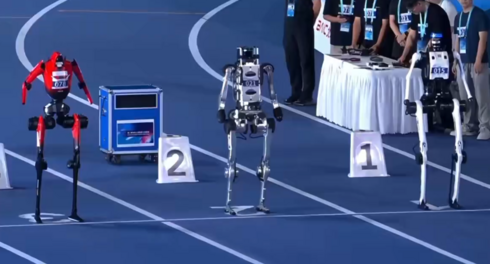
The latest demonstration came from TianGong Ultra, a Chinese humanoid robot that ran 100 metres in 8.64 seconds at the 2026 World Humanoid Robot Games, beating the 9.58-second human world record set by Jamaican sprint legend Usain Bolt.
The feat has drawn international attention, but for the engineers behind the robot, speed is only part of the challenge.
The bigger objective is to make humanoid robots reliable, adaptable and useful enough for businesses to deploy in everyday work.
Developed by X-Humanoid at the Beijing Humanoid Robot Innovation Centre, TianGong Ultra is being developed alongside other humanoid models for potential commercial and industrial applications.
According to Reuters, the company has already begun testing its robots for industrial work, including moving boxes at a factory in Beijing. The team is also exploring possible applications in commercial services, light industry, outdoor inspection and emergency rescue. (Reuters)
FROM THE TRACK TO THE WORKPLACE
China’s humanoid-robot industry has expanded rapidly, supported by government policies, investment and a large manufacturing ecosystem.
The country’s authorities are now pushing companies to test humanoid robots in real-world environments rather than limiting them to laboratories and technology demonstrations.
China’s national deployment drive targets more than 100 high-value application scenarios and more than 10,000 humanoid robots in regular deployment by the end of 2026, with areas including manufacturing, logistics, healthcare and emergency response. (Caixin Global)
The objective reflects a significant shift in the industry’s priorities.
For years, humanoid robots have attracted attention through demonstrations of walking, dancing, running and performing controlled tasks.
The harder test is whether they can repeatedly perform useful jobs safely, efficiently and at a cost businesses can justify.
THE FACTORY TEST
That transition is proving challenging.
Chinese humanoid robots are increasingly being tested in industrial environments, but they remain far from replacing human workers across entire production lines.
Many machines can perform specific tasks under controlled conditions but still struggle when environments change or when jobs require precise manipulation, rapid adaptation and independent decision-making.
Reuters reported that TianGong Ultra itself still faces practical challenges. The 75-kilogram robot can reach speeds above 17 metres per second, making braking a significant problem at high speed. (Reuters)
These limitations highlight an important point about the current robotics race.
The competition is not simply about whether a robot can move faster than a human.
It is about whether a robot can operate safely and reliably in the unpredictable conditions of a real workplace.
CHINA’S ROBOTICS INDUSTRY FACES A COMMERCIAL TEST
China’s rapid expansion in humanoid robotics has attracted significant investment and generated hundreds of robot products.
But technological progress does not automatically guarantee commercial success.
Chinese regulators have recently increased scrutiny of humanoid-robot companies seeking to list publicly, with attention shifting toward recurring revenue, financial sustainability and evidence that technological advances can translate into viable businesses. Reuters reported that the move followed increased investor enthusiasm and volatility surrounding some robotics companies. (Reuters)
The development points to a wider challenge facing the industry.
A robot that can run a record-breaking sprint may demonstrate impressive engineering.
A robot that can work consistently for a business, perform useful tasks without constant human intervention and deliver a financial benefit is a much harder achievement.
That is now the race China’s robotics companies are entering.
WHAT DOES THIS MEAN FOR AFRICA?
China’s robotics push could eventually have consequences far beyond its domestic market.
If Chinese manufacturers succeed in producing reliable humanoid robots at competitive prices, African companies could become potential users of the technology.
Factories, warehouses, logistics companies, mines and other industries could eventually deploy advanced robots for repetitive, physically demanding or hazardous tasks.
For Africa, however, the implications are complicated.
Many African economies depend heavily on labour-intensive industries to create employment. Greater automation could improve productivity and workplace safety, but it could also change the demand for certain categories of human labour.
Humanoid robots are not currently capable of replacing workers across most African industries.
However, their rapid development raises an important question for policymakers:
Will African economies prepare their workers for an increasingly automated global economy, or will they mainly become consumers of technologies developed elsewhere?
NIGERIA’S OPPORTUNITY
For Nigeria, the development presents both a challenge and an opportunity.
The country has a large workforce and a growing technology sector, but it continues to face gaps in advanced technical skills, industrial automation and manufacturing capacity.
If humanoid robots eventually become affordable and commercially reliable, Nigerian businesses could potentially use them in areas such as manufacturing, logistics, warehousing, inspection and other physically demanding operations.
But simply importing robots would not necessarily create a domestic robotics industry.
Nigeria could also participate in the wider ecosystem through artificial intelligence, robotics maintenance, engineering, software development, automation services, data and technical training.
This would require stronger investment in science, technology, engineering and mathematics education, as well as closer cooperation between universities, technology companies and manufacturers.
The objective should not necessarily be for Nigeria to immediately compete with China in building humanoid robots.
Instead, the country could focus on developing the skills and businesses needed to operate, maintain, integrate and improve advanced automation technologies.
FROM IMPORTER TO PARTICIPANT
China’s rise in humanoid robotics could create another dimension in Africa-China economic relations.
China has already become a major source of manufactured goods, technology and industrial equipment for African markets. If humanoid robots become commercially viable, they could become another category of Chinese technology entering African economies.
That could provide African businesses with access to new productivity-enhancing technologies.
But it could also increase technological dependence if African countries remain only end-users.
For Africa, the bigger opportunity may therefore lie in technology partnerships that include training, skills development, maintenance capacity and knowledge transfer.
The continent could benefit not only by buying robots, but by developing the people capable of working alongside them.
THE RACE BEYOND BOLT
TianGong Ultra’s 8.64-second sprint may have captured the world’s attention, but China’s bigger race is happening away from the track.
Engineers are trying to turn spectacular demonstrations into dependable machines capable of operating in factories, commercial environments and other workplaces.
The technology still faces major challenges, including reliability, autonomy, safety and commercial viability.
But China’s direction is clear: the country is pushing humanoid robotics from technological spectacle towards practical deployment.
For Africa, the question is therefore no longer simply whether China can build robots capable of outrunning humans.
It is whether African economies will be prepared for the new industries, skills, jobs and economic opportunities that could emerge as robots begin to do more work.
The race beyond Bolt may ultimately be less about speed — and more about who is prepared for the economy that comes next.
The latest demonstration came from TianGong Ultra, a Chinese humanoid robot that ran 100 metres in 8.64 seconds at the 2026 World Humanoid Robot Games, beating the 9.58-second human world record set by Jamaican sprint legend Usain Bolt.
The feat has drawn international attention, but for the engineers behind the robot, speed is only part of the challenge.
The bigger objective is to make humanoid robots reliable, adaptable and useful enough for businesses to deploy in everyday work.
Developed by X-Humanoid at the Beijing Humanoid Robot Innovation Centre, TianGong Ultra is being developed alongside other humanoid models for potential commercial and industrial applications.
According to Reuters, the company has already begun testing its robots for industrial work, including moving boxes at a factory in Beijing. The team is also exploring possible applications in commercial services, light industry, outdoor inspection and emergency rescue. (Reuters)
FROM THE TRACK TO THE WORKPLACE
China’s humanoid-robot industry has expanded rapidly, supported by government policies, investment and a large manufacturing ecosystem.
The country’s authorities are now pushing companies to test humanoid robots in real-world environments rather than limiting them to laboratories and technology demonstrations.
China’s national deployment drive targets more than 100 high-value application scenarios and more than 10,000 humanoid robots in regular deployment by the end of 2026, with areas including manufacturing, logistics, healthcare and emergency response. (Caixin Global)
The objective reflects a significant shift in the industry’s priorities.
For years, humanoid robots have attracted attention through demonstrations of walking, dancing, running and performing controlled tasks.
The harder test is whether they can repeatedly perform useful jobs safely, efficiently and at a cost businesses can justify.
THE FACTORY TEST
That transition is proving challenging.
Chinese humanoid robots are increasingly being tested in industrial environments, but they remain far from replacing human workers across entire production lines.
Many machines can perform specific tasks under controlled conditions but still struggle when environments change or when jobs require precise manipulation, rapid adaptation and independent decision-making.
Reuters reported that TianGong Ultra itself still faces practical challenges. The 75-kilogram robot can reach speeds above 17 metres per second, making braking a significant problem at high speed. (Reuters)
These limitations highlight an important point about the current robotics race.
The competition is not simply about whether a robot can move faster than a human.
It is about whether a robot can operate safely and reliably in the unpredictable conditions of a real workplace.
CHINA’S ROBOTICS INDUSTRY FACES A COMMERCIAL TEST
China’s rapid expansion in humanoid robotics has attracted significant investment and generated hundreds of robot products.
But technological progress does not automatically guarantee commercial success.
Chinese regulators have recently increased scrutiny of humanoid-robot companies seeking to list publicly, with attention shifting toward recurring revenue, financial sustainability and evidence that technological advances can translate into viable businesses. Reuters reported that the move followed increased investor enthusiasm and volatility surrounding some robotics companies. (Reuters)
The development points to a wider challenge facing the industry.
A robot that can run a record-breaking sprint may demonstrate impressive engineering.
A robot that can work consistently for a business, perform useful tasks without constant human intervention and deliver a financial benefit is a much harder achievement.
That is now the race China’s robotics companies are entering.
WHAT DOES THIS MEAN FOR AFRICA?
China’s robotics push could eventually have consequences far beyond its domestic market.
If Chinese manufacturers succeed in producing reliable humanoid robots at competitive prices, African companies could become potential users of the technology.
Factories, warehouses, logistics companies, mines and other industries could eventually deploy advanced robots for repetitive, physically demanding or hazardous tasks.
For Africa, however, the implications are complicated.
Many African economies depend heavily on labour-intensive industries to create employment. Greater automation could improve productivity and workplace safety, but it could also change the demand for certain categories of human labour.
Humanoid robots are not currently capable of replacing workers across most African industries.
However, their rapid development raises an important question for policymakers:
Will African economies prepare their workers for an increasingly automated global economy, or will they mainly become consumers of technologies developed elsewhere?
NIGERIA’S OPPORTUNITY
For Nigeria, the development presents both a challenge and an opportunity.
The country has a large workforce and a growing technology sector, but it continues to face gaps in advanced technical skills, industrial automation and manufacturing capacity.
If humanoid robots eventually become affordable and commercially reliable, Nigerian businesses could potentially use them in areas such as manufacturing, logistics, warehousing, inspection and other physically demanding operations.
But simply importing robots would not necessarily create a domestic robotics industry.
Nigeria could also participate in the wider ecosystem through artificial intelligence, robotics maintenance, engineering, software development, automation services, data and technical training.
This would require stronger investment in science, technology, engineering and mathematics education, as well as closer cooperation between universities, technology companies and manufacturers.
The objective should not necessarily be for Nigeria to immediately compete with China in building humanoid robots.
Instead, the country could focus on developing the skills and businesses needed to operate, maintain, integrate and improve advanced automation technologies.
FROM IMPORTER TO PARTICIPANT
China’s rise in humanoid robotics could create another dimension in Africa-China economic relations.
China has already become a major source of manufactured goods, technology and industrial equipment for African markets. If humanoid robots become commercially viable, they could become another category of Chinese technology entering African economies.
That could provide African businesses with access to new productivity-enhancing technologies.
But it could also increase technological dependence if African countries remain only end-users.
For Africa, the bigger opportunity may therefore lie in technology partnerships that include training, skills development, maintenance capacity and knowledge transfer.
The continent could benefit not only by buying robots, but by developing the people capable of working alongside them.
THE RACE BEYOND BOLT
TianGong Ultra’s 8.64-second sprint may have captured the world’s attention, but China’s bigger race is happening away from the track.
Engineers are trying to turn spectacular demonstrations into dependable machines capable of operating in factories, commercial environments and other workplaces.
The technology still faces major challenges, including reliability, autonomy, safety and commercial viability.
But China’s direction is clear: the country is pushing humanoid robotics from technological spectacle towards practical deployment.
For Africa, the question is therefore no longer simply whether China can build robots capable of outrunning humans.
It is whether African economies will be prepared for the new industries, skills, jobs and economic opportunities that could emerge as robots begin to do more work.
The race beyond Bolt may ultimately be less about speed — and more about who is prepared for the economy that comes next.