
Nigeria is stepping up efforts to attract investment, expand trade and deepen economic cooperation with major emerging economies as Vice President Kashim Shettima represents President Bola Ahmed Tinubu at the 18th BRICS Summit in New Delhi, India.
Shettima arrived in New Delhi on Friday, September 11, leading a high-level Nigerian delegation to the two-day summit, which begins on Saturday.
The delegation includes Foreign Affairs Minister Bianca Odumegwu-Ojukwu, Minister of Industry, Trade and Investment Jumoke Oduwole, Minister of Communications, Innovation and Digital Economy Bosun Tijani, and Minister of Environment Balarabe Lawal.
Nigeria’s participation comes as the Federal Government seeks to turn its BRICS partnership into stronger commercial relationships, fresh investment and new opportunities for Nigerian businesses.
Nigeria targets trade, investment opportunities
The government is particularly interested in expanding cooperation in trade, investment, agriculture, technology, artificial intelligence, manufacturing and industrial development.
Oduwole said Nigeria wants to deepen its economic relationship with India while attracting more Indian investment into the country.
She disclosed that investors of Indian origin had indicated interest in engaging the Nigerian delegation during the summit, creating an opportunity for Nigeria to present its investment prospects directly to potential partners.
The minister also pointed to energy as another area where Nigeria wants to rebuild and expand cooperation with India.
India has previously been a major buyer of Nigerian crude oil, and the Federal Government is now looking to increase that trade as global energy markets continue to face disruptions.
“India used to buy Nigerian oil quite a lot, so we are looking at how to expand that,” Oduwole said.
Nigeria looks beyond oil
While crude oil remains an important part of Nigeria-India trade, the government is seeking a broader relationship built around technology, agriculture and industrial development.
Foreign Affairs Minister Odumegwu-Ojukwu highlighted India’s experience in using technology and digital platforms to engage its large youth population as an area Nigeria could learn from.
She also identified India’s strengths in agriculture and the digital economy as areas with potential for deeper cooperation.
For Nigeria, the focus is increasingly on using international partnerships to support economic diversification, create opportunities for young people and attract capital into productive sectors.
Why the BRICS platform matters
Nigeria became a BRICS partner country in January 2025, giving it a formal avenue to engage with the expanded grouping without becoming a full member.
The partnership provides Nigeria with access to discussions involving some of the world’s largest emerging economies and creates opportunities for greater South-South cooperation.
The BRICS summit itself is bringing together leaders from the group’s 11 members, including China, India, Brazil, Russia, South Africa, Egypt, Ethiopia, Indonesia, Iran and the United Arab Emirates, with Saudi Arabia also listed among the grouping’s members in several current reports. The summit is focusing on issues including trade, investment, technology, energy and global economic cooperation.
China’s presence gives the summit additional importance for Nigeria, particularly as Abuja continues to pursue deeper economic and infrastructure cooperation with Beijing.
Shettima expected to hold bilateral talks
During the summit, Shettima is expected to participate in high-level BRICS sessions and hold bilateral engagements with leaders and representatives of member and partner countries.
The discussions are expected to cover trade, investment, agriculture, technology and industrial development, while Nigeria will also participate in activities taking place alongside the summit.
For Abuja, the immediate objective is clear: use the BRICS platform to open more markets, attract investment and build partnerships that can support Nigeria’s economic ambitions.
As the summit gets underway in New Delhi, the bigger question will be whether the diplomatic engagements translate into actual investments, expanded export markets and new opportunities for Nigerian businesses.
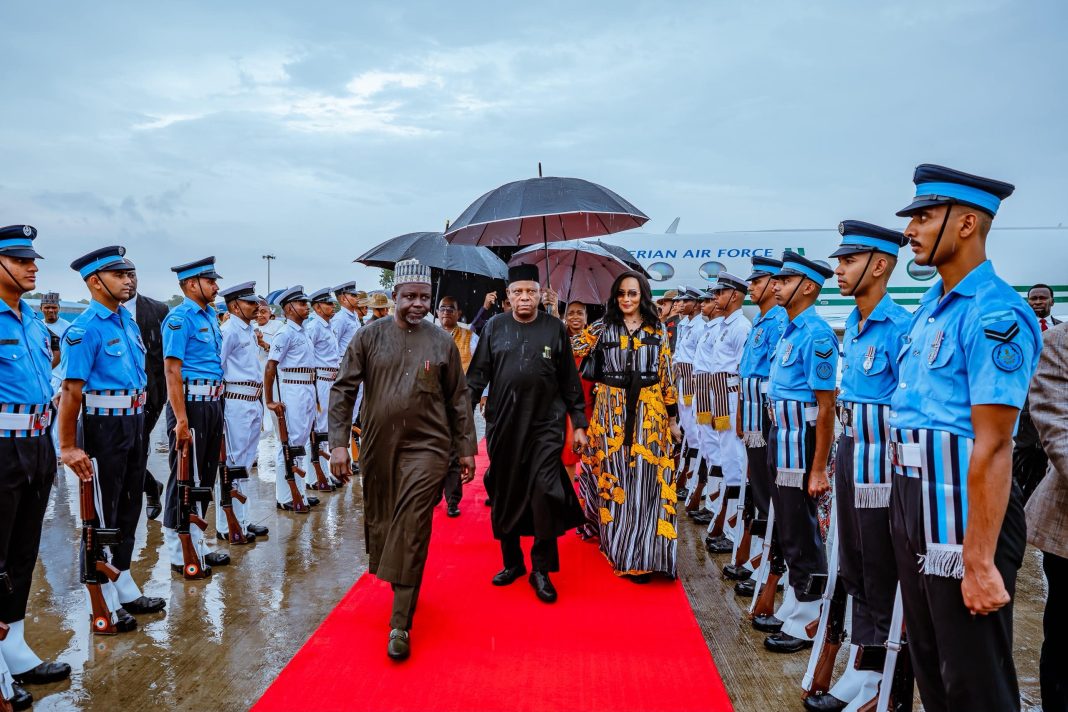
Nigeria Takes BRICS Push to India, Targets Bigger Trade and Investment Deals
Popular Categories


Previous article

Next article