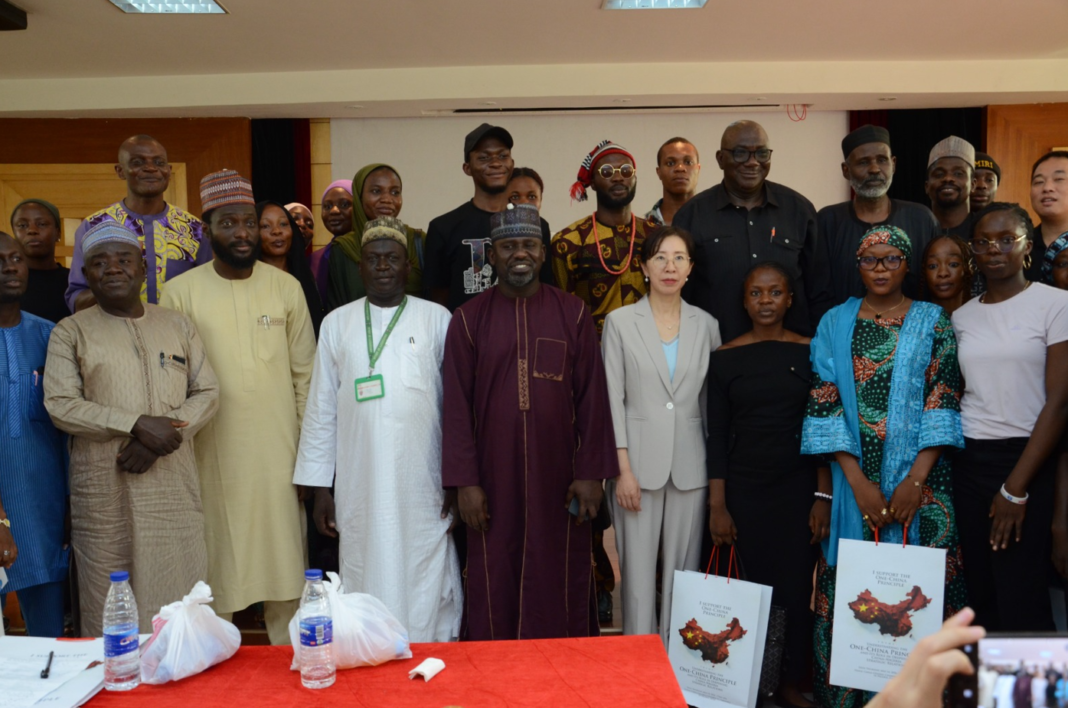
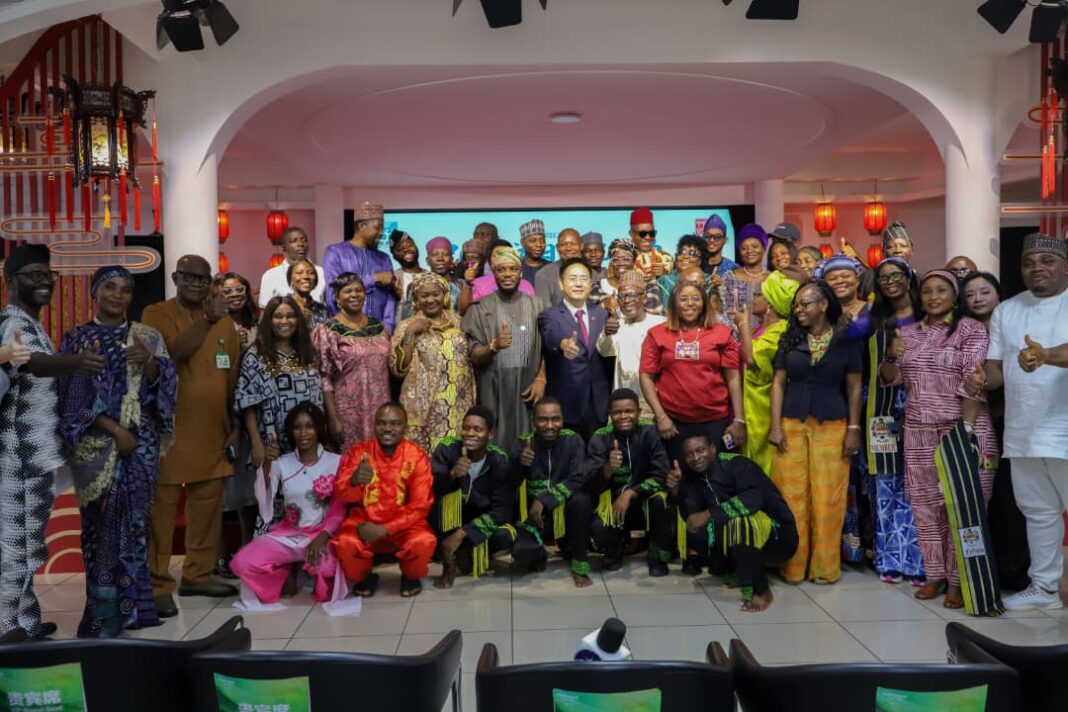

The China Cultural Centre in Nigeria hosted the 2026 China Tourism Day celebration in Abuja, bringing together government officials, diplomats, tourism stakeholders, and cultural enthusiasts to reaffirm the growing cultural and tourism partnership between Nigeria and China.
The event, organised by the China Cultural Centre in Nigeria, highlighted the role of tourism as a driver of cultural exchange, economic growth, and people-to-people cooperation between both countries.
Speaking at the celebration, Yang Jianxing said the 2026 China Tourism Day, themed “Enjoying Quality Tourism, Exploring Beautiful Landscapes,” reflects the true essence of tourism in fostering friendship, mutual understanding, and appreciation of diverse civilizations.
According to him, tourism serves as an important bridge connecting nations and peoples through culture and shared experiences.
“Today, we are holding this celebration to share the unique charm of Chinese tourism with our Nigerian friends and explore the broad prospects for cultural and tourism cooperation between our two countries,” he said.
Yang noted that China and Nigeria are both ancient civilizations blessed with rich cultural heritage and remarkable tourist attractions. He referenced iconic destinations such as the Great Wall of China and Mount Tai, alongside Nigeria’s Osun-Osogbo Sacred Grove and Zuma Rock, as symbols of cultural identity and friendship between both nations.
He highlighted several successful cultural exchange initiatives between China and Nigeria, including the “Happy Chinese New Year” celebrations and the China-Nigeria Cultural and Tourism Festivals, which have promoted deeper understanding through artistic performances, culinary exchanges, and exhibitions of intangible cultural heritage.
Abdulkarim Ozi Ibrahim, Permanent Secretary of the Federal Ministry of Arts, Culture, Tourism and Creative Economy, described the relationship between Nigeria and China as a partnership that has flourished for more than five decades.
Represented by Yohanna Evandu, a director in the ministry, Ibrahim said the celebration underscored the strengthening diplomatic and cultural ties between the two countries.
“The cultural relationship between Nigeria and China has lasted for over five decades and is still growing stronger,” he stated.
He said Nigeria has benefited significantly from cultural cooperation with China, particularly in training and educational opportunities. According to him, Nigerian acrobats trained in China now perform at international events, while he personally benefited from a Chinese government scholarship that enabled him to obtain a master’s degree from Peking University.
Ibrahim also praised China’s achievements in tourism infrastructure, environmental aesthetics, and heritage conservation.
“If you go to China, once you step out of the airport, the environment is breathtaking. The architecture, the gardens, and the level of heritage conservation and presentation are remarkable,” he said.
Also speaking, Aare Abisoye Fagade, Director General and Chief Executive Officer of the National Institute for Hospitality and Tourism (NIHOTOUR), described China’s tourism development as a global model worthy of emulation.
Fagade commended the Chinese Embassy in Nigeria and the China Cultural Centre for sustaining a platform that promotes cultural diplomacy, tourism cooperation, and mutual economic development.
“China’s remarkable tourism story stands today as a global model of strategic planning, infrastructure development, cultural preservation, innovation, and human capital development,” he said.
He particularly praised China’s ability to modernise technologically while preserving its cultural heritage, noting that Nigeria could learn valuable lessons from the Chinese experience.
Fagade added that the vision behind China Tourism Day aligns with the economic agenda of Bola Ahmed Tinubu, which prioritises economic diversification, youth empowerment, skills development, and international partnerships.
According to him, the implementation of the NIHOTOUR Act 2022 has strengthened the institute’s role in standardising and professionalising Nigeria’s tourism and hospitality sector.
He called for stronger collaboration between Nigeria and China in tourism education, hospitality training, tourism technology, culinary arts, destination management, and professional certification.
The NIHOTOUR Director General identified tourism training exchange programmes, workforce development, investment in tourism infrastructure, technology transfer, destination marketing, and cultural tourism promotion as key areas for future collaboration.
All the stakeholders reaffirmed their commitment to strengthening cultural exchanges and tourism cooperation between Nigeria and China, expressing optimism that increased collaboration would boost economic growth, cultural understanding, and people-to-people relations between both nations.
The event concluded with cultural displays and engagements celebrating the enduring friendship between Nigeria and China and the growing prospects for bilateral cooperation in tourism and the creative economy.