
From the strength of Shaolin Kung Fu to the graceful movements of Tai Chi, Chinese martial arts combine physical skill, discipline and traditional philosophy. Today, they remain an important part of Chinese culture and a bridge between China and the world.
From Ancient Combat to Traditional Martial Arts
The history of Chinese martial arts dates back thousands of years. Early forms developed from hunting, self-defence and military training.
During the pre-Qin period, people practised archery, wrestling and weapons training. Under the Han and Tang dynasties, swordsmanship and other combat techniques continued to develop.
By the Ming and Qing dynasties, martial arts had spread widely among ordinary people. Different regions developed their own fighting styles, techniques and weapons traditions.
Over time, these practices became more than methods of combat. They also came to represent discipline, courage and respect.
Shaolin Kung Fu: Strength and Discipline
One of the most famous traditions is Shaolin Kung Fu.
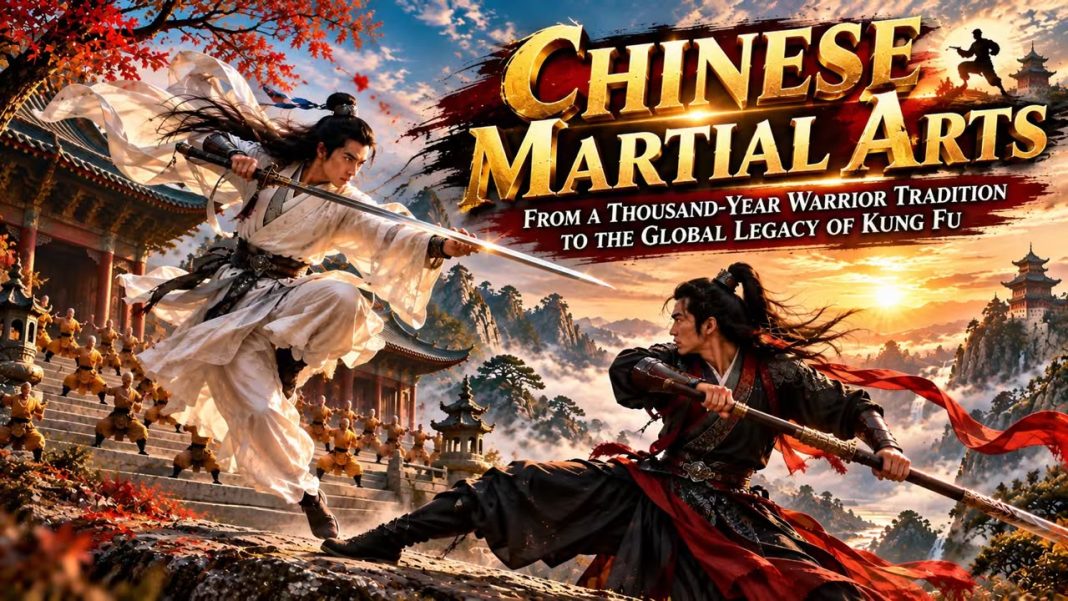
Located on Mount Song in Henan Province, the Shaolin Temple was founded in 495 AD. Over the centuries, it became closely associated with a distinctive martial arts tradition.
Shaolin Kung Fu is known for its powerful strikes, staff techniques and demanding physical training. It requires strength, speed, balance and coordination.
Beyond physical ability, it also emphasises patience, self-control and moral character.
Today, Shaolin Kung Fu attracts students and enthusiasts from different countries who want to learn its techniques and understand its cultural roots.
Tai Chi: The Art of Balance and Harmony
While Shaolin Kung Fu is known for its dynamic movements, Tai Chi offers a gentler approach.
It combines slow, controlled movements with breathing, balance and concentration. Its practice reflects traditional Chinese ideas about harmony, balance and the relationship between softness and strength.
In 2020, Tai Chi was inscribed on UNESCO’s Representative List of the Intangible Cultural Heritage of Humanity.
Today, people practise Tai Chi in Chinese parks, fitness centres and communities around the world. Many value it as a traditional exercise that supports balance, flexibility and overall well-being.
Weapons, Courage and Chinese Tradition
Weapons training is another important part of Chinese martial arts.
The sword, spear, sabre and staff each have distinct techniques and historical significance.
The straight sword, in particular, has long featured in Chinese literature and traditional stories about courage, honour and heroic warriors.
The Tang Dynasty poet Li Bai captured this spirit in his poem The Knight-Errant, writing:
“With ten steps, he strikes down a man; across a thousand miles, none can stop him.”
Such stories have helped shape the image of the fearless martial arts hero in Chinese culture.
Kung Fu Goes Global Through Cinema
In the 20th century, Chinese martial arts reached a much wider international audience through film.
Bruce Lee introduced audiences worldwide to the speed, power and philosophy of Kung Fu through films such as Fist of Fury and The Way of the Dragon.
Jackie Chan later became famous for combining martial arts with daring stunts and comedy. Jet Li also helped popularise Chinese martial arts through films such as The Shaolin Temple and Once Upon a Time in China.
Their performances inspired audiences across Asia, Europe, the Americas and Africa to take an interest in Kung Fu.
Across Africa, Chinese martial arts have also created opportunities for young people to explore Chinese traditions, history and culture.
A Living Heritage Connecting the World
Today, Chinese martial arts are more than a form of self-defence or physical exercise. They are a living cultural heritage that connects people across countries and generations.
Shaolin Kung Fu represents strength, discipline and determination, while Tai Chi highlights balance, patience and harmony. Together, they demonstrate the many dimensions of China’s martial arts tradition.
From the Shaolin Temple to international martial arts schools, and from ancient weapons to modern cinema, Chinese martial arts continue to evolve while preserving their cultural roots.
Every movement reflects generations of practice. Every technique carries a story of tradition, discipline and human achievement.
Chinese Martial Arts: A Thousand-Year Tradition Inspiring the World
Popular Categories


Previous article