


Seven ECOWAS member states have deployed the ECOWAS National Biometric Identity Card (ENBIC) as the regional bloc works to improve free movement and digital border management.
The countries are Nigeria, Ghana, Benin, Senegal, The Gambia, Sierra Leone and Guinea-Bissau.
ECOWAS Targets December 2026
ECOWAS interior ministers have committed to advancing mutual recognition of the biometric card at land, air and sea borders by December 2026.
The move supports the bloc’s free movement framework and efforts to connect border management systems across West Africa.
However, deployment in seven countries does not mean cardholders can travel without restrictions across all ECOWAS member states.
The bloc is still working on cross-border recognition, system interoperability and implementation arrangements.
Biometric Card to Improve Border Checks
The ENBIC is designed to provide machine-readable identification and improve identity verification at border points.
ECOWAS is also working to improve interoperability between national border management information systems.
A more connected system could make border checks faster and more efficient.
Potential Impact on Regional Business
The initiative could also benefit regional trade and investment.
Businesses often move executives, engineers, technicians, drivers, traders and project workers across West African borders.
Faster identity checks could reduce delays and make it easier for companies to operate across several regional markets.
The development could be particularly useful for companies based in Nigeria and serving markets in Benin, Ghana, Sierra Leone and other ECOWAS countries.
For Chinese and other international investors, improved mobility could also support wider regional operations instead of separate strategies for each country.
December 2026 Milestone
The next major milestone is December 2026, when ECOWAS aims to advance mutual recognition of the biometric card across land, air and sea borders.
If implemented as planned, the system could strengthen free movement, cross-border trade, investment and regional economic integration.
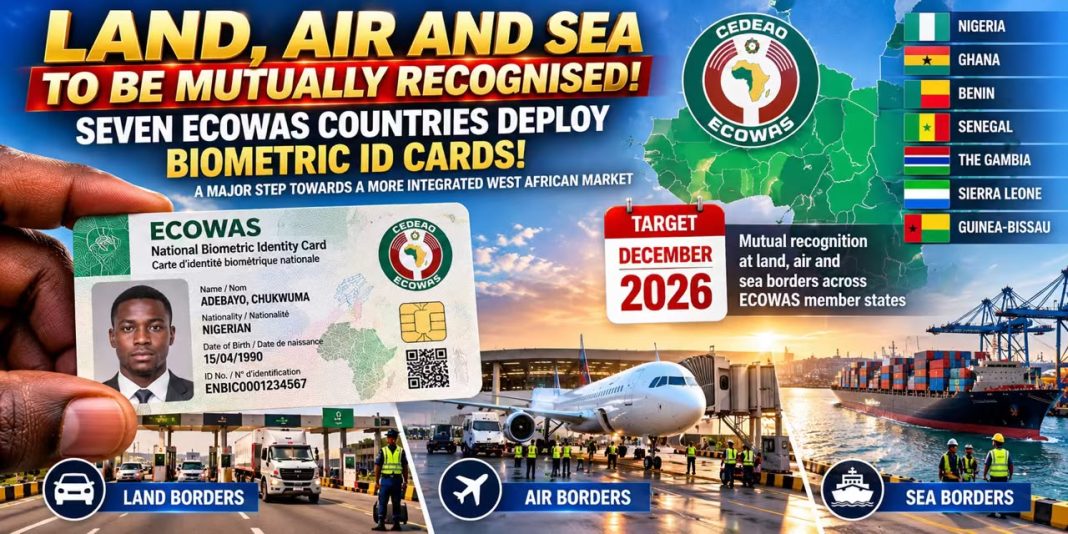
Seven ECOWAS Countries Deploy Biometric ID Cards as Region Moves Toward Digital Border Recognition
Popular Categories


Previous article