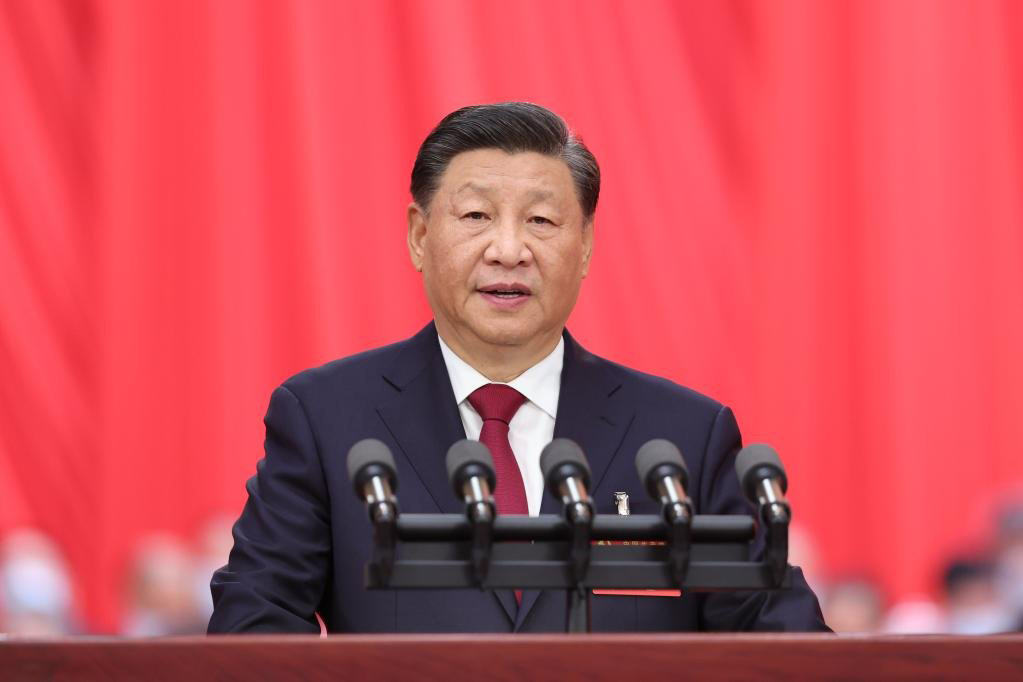

It has been nearly one year since Xi Jinping, the Secretary General of the Communist Party of China and also president of the country, proposed an essential mechanism to return the international system and make it more inclusive with regard to problem-solving and real results. The proposal for the Global Governance Initiative last year came at a significant historical juncture, which marked the 80th anniversary of the victory in the world war against fascism and the establishment of the United Nations. Following immediately after its proposal in 2025, 160 countries and international organizations threw their weight behind it and over 60 countries joined the group of friends of Global Governance.
From the background that “history tells us that at difficult times, we must uphold our original commitment to peaceful co-existence, strengthen our confidence in win-win cooperation, advance in line with the trend of history and thrive with a shared future for humanity”, the Chinese leader issued a practical roadmap to an inclusive global order.
Despite the trends of peace and development, broad inclusion and participation desired by all peoples and the seeming convergence of all human aspirations to these trends and the evolving trajectories towards the community of shared future for humanity, there is the obvious deficit in global governance and this is more pronounced in the evident shortage of the voices and impacts of the Global South in the essential mechanisms for global governance.
Because this basic lacuna in international relations and its governance process denies the vital inputs and the aggregate wisdom of the majority of the world stake-holders, outcomes of global governance have been riddled with deficit in basic consensus and could thus be paralyzed, without the benefit of broad contributions of the responses to the numerous global challenges.
China has taken the bold step to bridge the lacuna and has proposed the Global Governance Initiative (GGI).
In proposing the GGI, President Xi Jinping expressed China’s resolve to “work with all countries for a more just and equitable global governance system and advance toward a community with a shared future for humanity”. He further outlined the essential and basic features of the proposed Global Governance Initiative to include, first and foremost, sovereign equality, which recognizes the equal weight and stake of all states in the international system, which must translate to inclusive decision- making and equitable participation of all State actors, thereby giving effect to the democratization of the international system.
The Global Governance Initiative (GGI) would also be underpinned by calls for unconditional adherence to the United Nations system as the embodiment of universally recognized expression of the law and rule-based system of international intercourse, while cautioning that “the house rules of a few countries must not be imposed on others”.
The Global Governance Initiative (GGI) further emphasized multilateralism which shall be entrenched in the architecture of global governance system that would be characterized by “extensive consultations and joint contribution for shared benefit”, and further reaffirmed the centrality of the United Nations, whose authority and key role is irreplaceable in global governance. The proposed framework for Global governance underscored the fact that the initiative would not be just about the “games, Nations play”, but should be one that “ensure that the people of every nation are the actors in and beneficiaries of Global governance, so as to better tackle the common challenges of mankind. Only the People-centered approach to global governance can guarantee and deliver tangible results. The fifth leg of the proposed Initiative would focus on “taking real actions”, that produce tangible results.
The struggle for the reform of global institutions to make more inclusive has a fairly long history. In June 1964, a group of 77 countries, later to be enlarged to 134 from the Global South, came together “to articulate and promote their collective economic interest and enhance their joint negotiating capacity on all major international economic issues within the United Nations (UN) system and promote South-South cooperation for development. In 1975, their efforts came with modest success, with the United Nations resolution of the New International Economic Order (NIEO). But the Global North almost immediately pushed back and formed the Group of 7 or G7.
The Global Governance Initiative (GGI) proposed by China is adequately distilled from the lessons of history and its contemporary trends. It is not grand rhetoric but issues from rigorous interrogations of the current existential reality and international conditions. It is a response not only to the call of the times, but objectively represents the aggregate consensus of the global community that factional alliances and blocs, no matter how powerful, are grossly inadequate mechanisms to deal with the existing and emerging challenges of the international system and its obvious ripple effects on the respective nation-states.
And the reality of the emergence of the Global South and especially of China to the mainstream of the contemporary global power structure, and China’s even greater assumptions of international responsibilities, means that her sober and measured proposals and initiatives cannot be taken lightly. And not only does China have resources to translate visions to actionable processes, but she also has a reputation for putting its money where its mouth is.
Therefore, while it is expected that some vested and entrenched interests in the current unbalanced international governance system and the strident call for its reforms will push back like they did to the historic call for global equity by the G77, it is however not going to be business as usual as the imperative for the reforms of the global governance system exemplified in the firm and principled framework of the Global Governance Initiative (GGI) is an idea, whose time has come.
Like earlier China Initiatives on Global Development, Security and Civilizational Dialogues, Africa and China have again found common ground with the initiative on Global governance. Is Africa’s long-held view that global governance is grossly unbalanced and non-representative of the post-Cold War reality, for which Africa and her visibility on the global stage is a key feature.
From the struggles for a New International Economic Order (NIEO), to the strident calls for the reform of international governance processes, including the United Nations system, Africa has been unapologetically on the frontline. With China’s rise and its transition to the mainstream of the contemporary global power structure, it bears on its shoulders the enhanced global responsibility, the principled and historic African demand for the reform of the international governance system.
As a major African power, Nigeria’s response to the Global Governance Initiative has been brave and hugely forward-looking. Just a few weeks after the proposal for the GGI, the federal government conveyed “its appreciation to the government of the People’s Republic of China for launching the New Global Governance Initiative”. The statement by the Nigerian government noted that the launch of the GGI ahead of the 80th Anniversary of the United Nations is “a timely and thoughtful contribution to ongoing efforts aimed at strengthening the international system. As one of Africa’s largest economies and active participant in multilateral diplomacy, Nigeria views the GGI as a valuable platform for advancing shared priorities. It also further “recognizes the potential for alignment between the GGI and its national development objectives, the principle of strategic autonomy as well as the African Union’s Agenda 2063”.
One year after the proposal for the Global Governance Initiative, intervening events since then have given greater impetus to its relevance and imperative. From geopolitical tensions to economic and trade disruptions to climate calamities, a new world is possible but only based on a broadly shared responsibility, ensured and guaranteed by an inclusive global governance.
Charles Onunaiju, Director, Centre for China Studies, Abuja, Nigeria