
By Amjad M. Nyei
I studied in China from 2008 to 2016, attending universities in Jiangxi and Hubei Provinces—two regions closely associated with the Chinese Revolution that ultimately gave birth to the People’s Republic of China. Those eight years were both academically enriching and personally transformative. I witnessed firsthand the deep sense of patriotism among the Chinese people, as well as the respect they generally accorded to their governing institutions. Many of my classmates were committed members of the Communist Party of China (CPC) or actively participated in Party-related activities. The CPC’s presence was visible throughout university campuses. Red banners displaying educational slogans were common sights, carrying messages such as, “China’s Civilization Starts with Me,” “At the national level: Democracy, Civility, and Harmony; at the social level: Freedom, Equality, and Justice; at the individual level: Dedication, Integrity, and Friendliness.” These slogans constantly reminded citizens of their civic responsibilities while reinforcing the government’s commitment to national development and social cohesion.
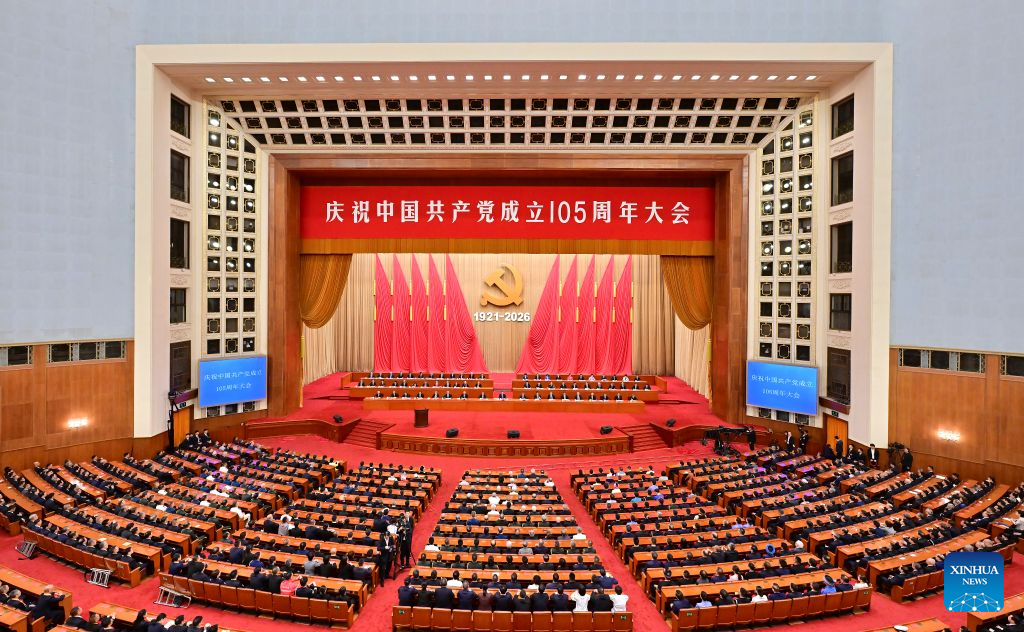
One memorable experience during my stay in China was the celebration of the 60th anniversary of the founding of the People’s Republic of China at Nanchang University. The entire campus was filled with excitement, pride, and patriotism. Students devoted countless hours to rehearsing for the university’s grand gala, eager to contribute to the national celebration. On the evening of the event, the atmosphere was electric. The audience was treated to breathtaking cultural dances, moving poetry recitals, and theatrical performances depicting key moments of the Chinese Revolution. It was more than a celebration of history; it was a powerful expression of national identity and collective purpose. Witnessing such a profound display of unity and patriotism gave me a deeper appreciation of the values that have shaped modern China and continue to influence its remarkable development.
A party committed to state and its people has been diligently carrying out its responsibilities in spite numerous competing priorities.
A brief Historical Context and Modern Realities
The Chinese Communist Party (CPC) is the largest and one of the most powerful political organizations in the world and has played a crucial role in initiating most of the major reforms in China, especially during the period after 1970. Political party system is imported to China; the CPC is a Chinese cultural product: it is an entirely different breed of political party from those in the West. However, since the 1970s, reforms and open-door policy, the CPC has been enabled to accommodate various elements of democracy. This is termed, democracy with Chinese characteristics.
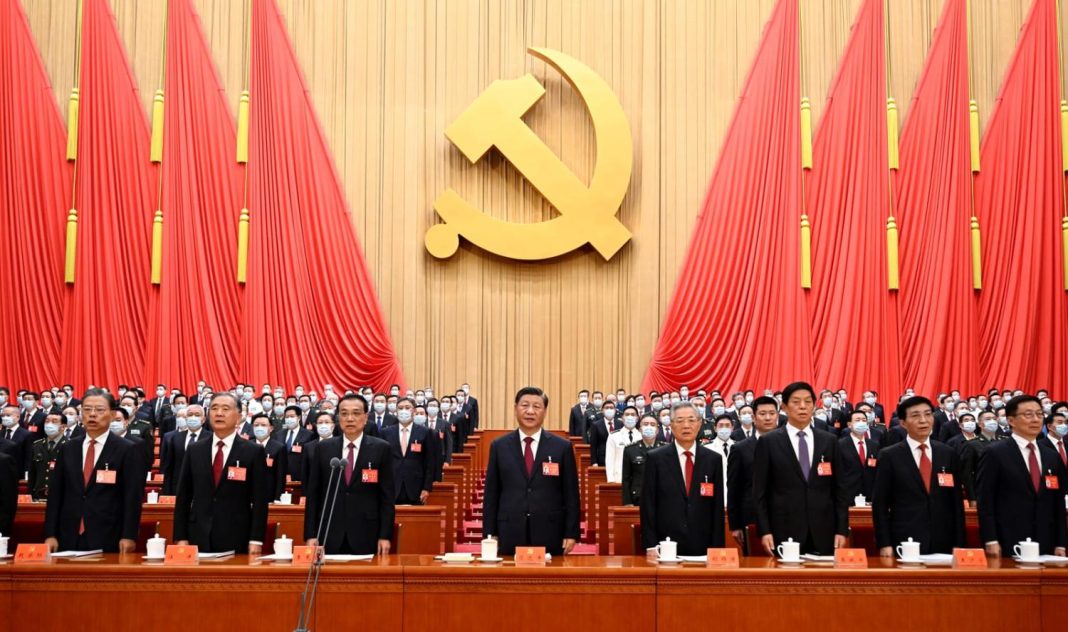
Founded in 1921 in the eastern Chinese city of Shanghai, the CPC has gone through dramatic transformation in its century of existence. With an initial membership of 53 people, the party has survived the political onslaughts of the KTM in the 1920s and 1930s and expanded drastically in subsequent decades1. Under the astute leadership of leadership Mao Zedong, the CPC became the ruling party of the People’s Republic of China (PRC) in 1949.
The party can be credited for unification and sovereignty of the China- ending the decades-long warlordism and civil war; established a centralized state controlling the mainland. The CPC has pushed for institutional continuity- building durable party-state institutions, including, party committees, the People’s Liberation Army (PLA), and the bureaucracy which has governed a population over a billion for seven plus decades. More importantly asserting territorial integration has been of major achievement of the party, integrating (e.g., Tibet and Xinjiang) into the PRC control and negotiated the return of Hon Kong and Macau in 1997 and 1999 respectively.
Meanwhile, economic and transformation and development, as well as science and technology innovation has been on the double in China, all thanks to the intentional plans and reforms of the CPC. China has sustained rapid GDP growth and poverty reduction orchestrated through high-growth policies since the late 1970s that lifted hundreds of millions out of extreme poverty. Industrialization and urbanization coupled with infrastructure built out has been strongly emphasised and implemented through competent structures of the CPC. China’s development journey is inseparable from the Party’s leadership. Over the past century, the Party has consistently renewed and strengthened itself, enabling it to lead the Chinese people through revolutions, construction and reform, and to usher in the historic achievements and transformations of the new era.
The CPC in 1921 vs the CPC in 2026: a Journey in Time
The Communist Party of China (CPC) has undergone one of the most remarkable transformations in modern political history. Organised by a small group of intellectuals and revolutionaries, the Party emerged during a period of profound national crisis characterized by political fragmentation, foreign intervention, and socioeconomic instability. With fewer than one hundred members at its inception, the CPC was primarily concerned with promoting Marxist ideology and mobilizing support for revolutionary change. Its early years were marked by political struggle, organizational development, and efforts to establish itself as a viable force within a rapidly changing China.
By contrast, the CPC of 2026 stands is the governing party of the People’s Republic of China and one of the largest political organizations in the world, with a membership exceeding one hundred million. Over the course of a century of existence, the Party evolved from an underground revolutionary movement into a highly institutionalized governing body responsible for administering the affairs of a nation of more than 1.4 billion people. Through successive historical phases—including the revolutionary era, socialist construction, reform and opening-up, and modernization—the CPC has adapted its policies and structures to address changing domestic and international realities while maintaining its central leadership role.
The differences between the CPC of 1921 and that of 2026 extend beyond scale and political influence. The Party’s principal objective in 1921 was the pursuit of revolutionary transformation and the overthrow of existing political structures. In 2026, however, its responsibilities encompass economic management, technological innovation, environmental sustainability, social governance, national security, and international affairs. China’s emergence as a major global economic and diplomatic actor has significantly expanded the Party’s role, requiring it to navigate complex challenges associated with globalization, development, and geopolitical competition.
Despite these profound changes, certain elements of continuity remain evident throughout the CPC’s historical journey. The Party continues to emphasize national development, political stability, and the pursuit of long-term strategic goals. While the CPC of 1921 sought to transform China through revolution, the CPC of 2026 seeks to advance national rejuvenation through governance and modernization. The century-long evolution from a small gathering of revolutionary activists to the leadership of a global power illustrates not only the adaptability of the Party but also the broader transformation of China itself, making the CPC’s development one of the most significant political narratives of modern times.
Western scholarship False Prediction of the CPC
A substantial body of Western political science literature has, at different intervals, forecasted the potential collapse or fragmentation of the Communist Party of China (CPC). Among the most cited voices in this baseless discourse are Gordon G. Chang, David Shambaugh, Roderick MacFarquhar, and Susan Shirk. Though differing in analytical depth and predictive certainty, their works collectively reflect a recurring “fragility thesis” in China studies—namely, that the structural contradictions of governance, economic imbalance, and elite political stress could culminate in regime breakdown. Gordon G. Chang’s 2001 argument remains the most direct collapse prediction, asserting that China’s entry into global capitalism would destabilize the Party-state and lead to imminent systemic failure. In contrast, Shambaugh and Shirk adopt more cautious tones, emphasizing erosion, fragility, and governance strain rather than immediate collapse.
David Shambaugh’s 2015 essay “The Coming Chinese Crackup,” argues that the CPC had entered a late-stage decline characterized by ideological decay, elite disunity, pervasive corruption, and diminishing governance capacity. While he later moderated his claims, Shambaugh maintained that the Chinese political model was not guaranteed indefinitely and that internal contradictions could eventually overwhelm institutional control. Susan Shirk similarly highlights the paradox of a strong yet brittle state, arguing that China’s centralized authority coexists with deep structural vulnerabilities, particularly in bureaucratic accountability, corruption control, and crisis responsiveness. Her analysis frames China as a “fragile superpower,” suggesting that external strength may conceal internal institutional stress. In today’s China, however, it is difficult that these arguments would be sustained. There has been massive improvement in the fight against corruption since President Xi took the helm of power in China. The Party has disciplined millions of officials and high-ranking elites to ensure the elimination of institutional graft. China has the quickest crisis responsiveness amongst the UNSC members. The 2008 devastating earthquake in Sichuan and the rapid response to the 2020 COVID-19 virus are evidence of China preparedness to combat challenges both at home and abroad. This speaks contrarily to Western criticism.
Another western writer on the issue is Roderick MacFarquhar. His contributions are more historical and structural than predictive, focusing on elite politics, ideological struggle, and the volatility of Maoist governance—especially during the Cultural Revolution period. His work underscores how factionalism, ideological radicalism, and leadership instability have historically threatened systemic coherence within the CPC. While MacFarquhar does not explicitly predict imminent collapse, his analysis of recurring elite conflict and ideological turbulence is often incorporated into broader arguments about regime fragility and potential systemic breakdown.
Despite these influential arguments, the contemporary reality of China in 2026 presents a striking counterpoint. Far from collapse, the CPC remains the central governing institution of a highly consolidated political system and the steward of the world’s second-largest economy. China has achieved sustained industrial upgrading, technological advancement in sectors such as artificial intelligence and green energy and expanded global economic influence through initiatives such as the Belt and Road framework. Politically, the CPC has strengthened internal discipline through extensive anti-corruption campaigns and reinforced centralized leadership under President Xi Jinping. Globally, China has emerged as a major strategic actor shaping trade networks, infrastructure investment, and multilateral diplomacy. This trajectory does not suggest systemic fragmentation, but adaptive resilience and institutional consolidation.
The juxtaposition between collapse-oriented scholarship and China’s contemporary trajectory highlights a central tension in political discourse: the difficulty of projecting the party-state durability systems undergoing rapid transformation. The CPC’s continued survival and expansion of state capacity suggest a more glaring reality- i.e., the purposeful leadership and rejuvenation agenda of the party and government. Rather than collapsing under internal contradictions, the Chinese political system has demonstrated a capacity for adaptation, institutional learning, and reform. This divergence between prediction and outcome underscores the importance of distinguishing between structural vulnerability and actual regime performance in comparative political analysis.
Lesson for African Development and Political Leadership
The developmental track record of the Communist Party OF China (CPC) offers a significant comparative reference for understanding state-led transformation in the Global South. From its emergence in 1921 to its consolidation of power and subsequent economic reforms, the CPC has demonstrated how long-term political continuity can shape developmental outcomes. For many African states, which continue to grapple with colonial legacies, institutional fragility, and uneven economic growth, China’s experience presents both an analytical model and a policy reference point. Scholars of comparative politics often highlight the importance of governance structures in explaining divergent development paths between East Asia and Africa.
A central lesson from the Chinese experience is the role of state capacity and political stability in enabling sustained development. The CPC has maintained a strong, centralized governing structure capable of implementing long-term development strategies with relatively high policy continuity. This has allowed China to pursue infrastructure expansion, industrialization, and poverty alleviation programs over multiple decades without major disruption. In contrast, many African countries face challenges of policy discontinuity due to electoral turnover, bureaucratic inefficiency, and political instability, and most recently, the wave of military takeovers. All of these put together hinder long-term planning and implementation. Strengthening institutions that ensure continuity in development planning may therefore be a critical priority for governance systems in Africa.
Another important lesson lies in China’s strategic use of state-led market reforms. Rather than adopting a rapid transition to liberal market capitalism, the CPC implemented gradual economic reforms under strong political control, particularly after 1978. This hybrid model enabled China to integrate into the global economy while maintaining domestic political stability and directing investment toward priority sectors such as infrastructure, manufacturing, and technology. For African economies, this suggests that selective state intervention—particularly in strategic sectors—may complement private sector development rather than oppose it. However, such an approach requires effective institutions, competent bureaucracy, and mechanisms to reduce corruption and inefficiency.
In conclusion, the Communist Party of China experience offers both practical insights and normative challenges for African development and political leadership. It underscores the importance of political stability, strategic planning, and strong state institutions in achieving sustained economic transformation. Contrary to West political thoughts and arguments, the CPC has no internal risk of collapse but strong well and determination to provide the basic needs for the state and people. For Africa, the most productive lesson is not imitation of the Chinese model, but the selective adaptation of its developmental strengths in ways that align with local political realities and democratic aspirations. This 105th anniversary of the CPC, come with greater opportunity for broader cooperation and for China-Africa cooperation within the framework of FOCAC and the Belt and Road Initiative.
Long live the CPC and the People of China.
Amjad M. Nyei is a China-trained scholar