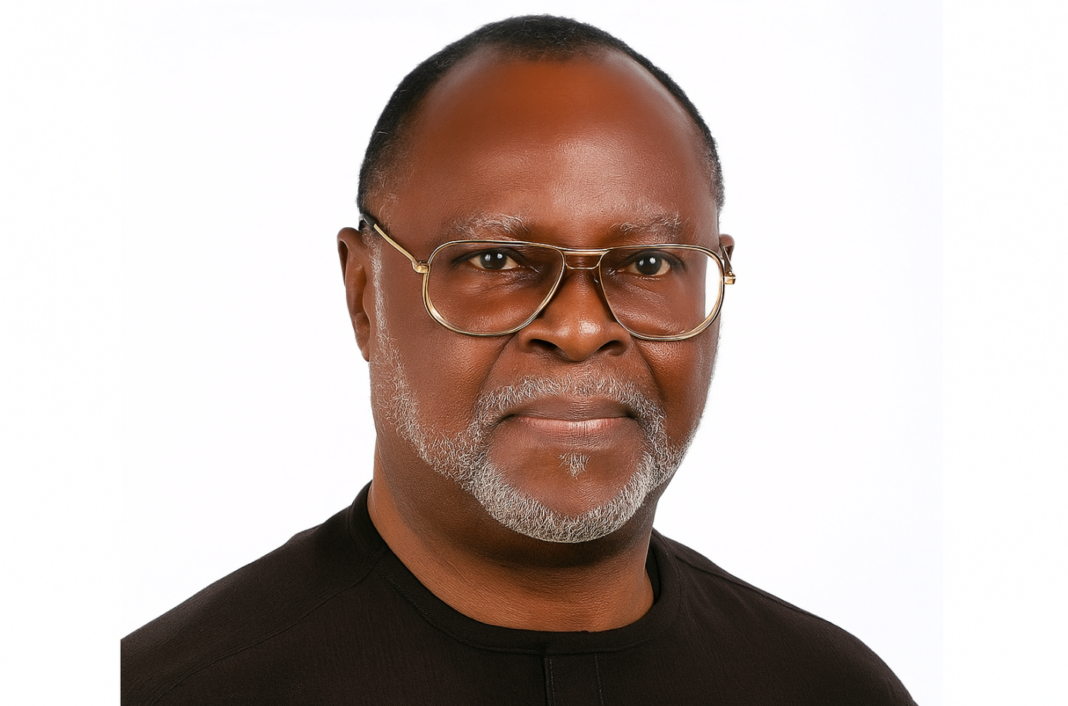

By Prof Udenta O Udenta
When U.S. Marines stormed Caracas in early January 2026 and seized President Nicolás Maduro and First Lady Cilia Flores, the world paused. A sitting head of state was abducted, flown out of his country, and put on trial in a U.S. court. Washington framed it as an anti-“narco-terrorism” operation. Internationally, it was a seismic rupture as well as a brazen assault on sovereignty and the principle of non-intervention that has anchored global stability since 1945.
FLAGRANT VIOLATION OF INTERNATIONAL LAW
The UN Charter is explicit: Article 2(4) forbids force against any state’s territorial integrity or political independence, except in self-defense or with Security Council authorization. Neither condition applied. There was no imminent threat to U.S. security, and the UN granted no mandate. Abducting a head of state, shielded by sovereign immunity, is a flagrant violation of law and diplomatic protocol.
The 1970 UN Declaration on Friendly Relations describes such acts as “aggression,” while Resolution 3314 identifies the abduction of leaders as unlawful coercion. This was not law enforcement. It was lawlessness masquerading as virtue. History repeats itself: in 1989, the U.S. invaded Panama, captured General Noriega, and flew him to Miami. International condemnation followed. Venezuela is the latest theatre of the same imperial reflex.
TRUMP’S GLOBAL TEMPER TANTRUM
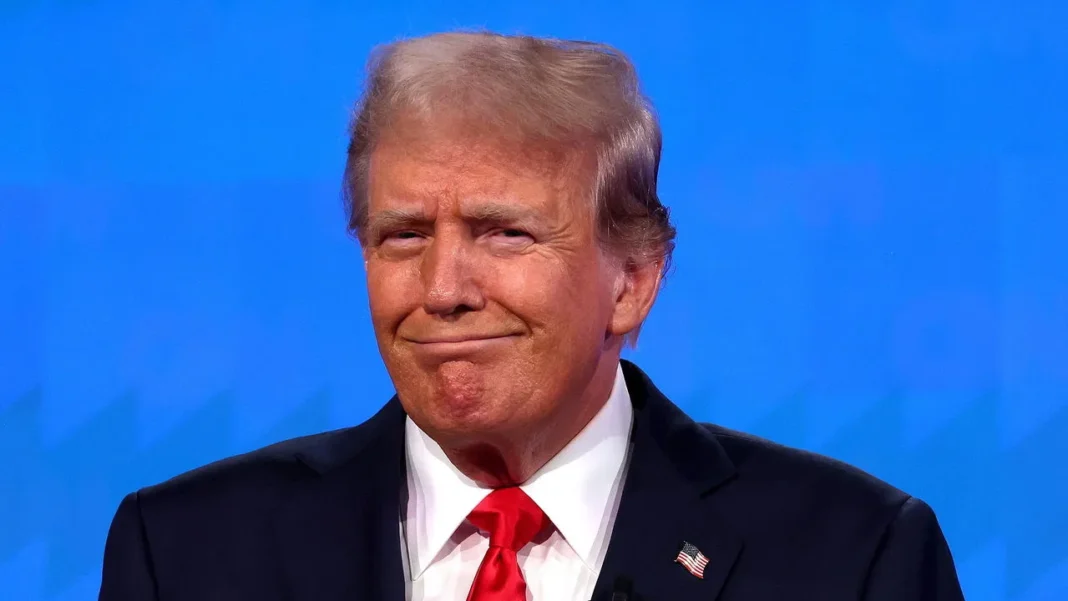
Trump’s foreign policy increasingly resembles a global temper tantrum. Open threats to Iran, Mexico, Colombia, the Greenland gambit, and even self-proclamation as acting president of Venezuela reveal a reckless pattern. These actions destabilize regions and undermine U.S. credibility. The Western bloc must speak with one voice to restrain this lawlessness.
Behind the bravado lie familiar motives: greed, resource control, and global influence. Venezuela’s oil reserves make it a strategic prize. The U.S. now insists on controlling up to fifty million barrels of crude and compelling Caracas to buy U.S.-made goods; a form of economic domination masquerading as liberation.
What makes this morally incoherent is the refusal to press for immediate free and fair elections. By delaying the electoral process, the U.S. can consolidate gains and shape a compliant political apparatus. Liberation becomes prolonged oversight, and sovereignty becomes subordinate to Washington’s strategic and commercial interests.
THE NIGERIAN “CHRISTIAN GENOCIDE” NARRATIVE
Trump’s rhetoric about a “Christian genocide” in Nigeria illustrates manipulation of moral narratives for political gain. The 2025 Christmas Day strike in Sokoto targeted terrorist cells, yet U.S. media framed it as anti-Christian violence. Investigations revealed extremists responsible for kidnappings and killings cut across religious lines.
Nigeria, Africa’s largest economy with vast oil reserves and the continent’s largest workforce, is more than a security concern. Framing internal violence as religious persecution simplifies reality and serves U.S. political and economic objectives: galvanizing evangelical support, justifying intervention, and pressuring Abuja on oil-sector policies favourable to Washington.
The narrative obscures Nigerian agency and side-lines regional solutions through ECOWAS and the African Union. In short, moral pretexts conceal strategic designs.
CHINA: PARTNERSHIP OVER COERCION
While the U.S. flexes military muscle, China builds partnerships. Its Global Governance Initiative (GGI) emphasizes cooperation, respect for sovereignty, and shared development.
Beyond GGI, China’s diplomacy is tangible. Angola benefited from post-war rail and power reconstruction; Kenya expanded renewable energy and tech cooperation; Mali and Niger received mediation support; Nigeria and Congo gained financial support and transport infrastructure; South Sudan stabilized after decades of conflict with Chinese support.
China’s approach contrasts sharply with the U.S.: no sanctions, no ultimatums, just engineers, planners, and patient collaboration. Its initiatives promote peace, economic growth, and multilateralism. Whether motivated by altruism or interest, China fosters interdependence, not intimidation.
COERCION VERSUS COOPERATION
The world is witnessing two visions of global order. Trump’s America seeks dominance through fear and unilateralism. China invests in infrastructure, dialogue, and cooperation.
The GGI is more than a framework; it embodies a worldview where global problems such as poverty, climate change, disease, and conflict, require multilateral solutions. Trump’s “America First” approach revives imperialist logic under a modern guise.
Across Africa, from Ethiopia to Angola, China’s presence is tangible: railways, hospitals, industrial zones. The difference is clear: the U.S. imposes conditions; China builds capacity. Its diplomacy reinforces stability, peace, and equitable growth.
A DANGEROUS PRECEDENT
By abducting Venezuela’s president, the U.S. revives the Noriega precedent of 1989. If a powerful nation can seize another’s leader under the guise of law enforcement, no state is fully sovereign.
This sets a chilling standard. International institutions are weakened. Law is subordinated to might. If force dictates legitimacy, the world risks returning to pre-modern power dynamics where the strong dominate and the rule of law becomes optional.
CALL FOR GLOBAL RESILIENCE
The abduction of Venezuela’s president is a moral tragedy. It tears at global order, revives conquest-era ethos, and exposes systemic fragility.
If the UN Charter and sovereignty still hold value, this act cannot pass unchallenged. Collective governance, where nations cooperate as equals, must take precedence over unilateral crusades.
The ultimate question: will law restrain power, or will the world once again bow to the ruthless logic of tyranny?