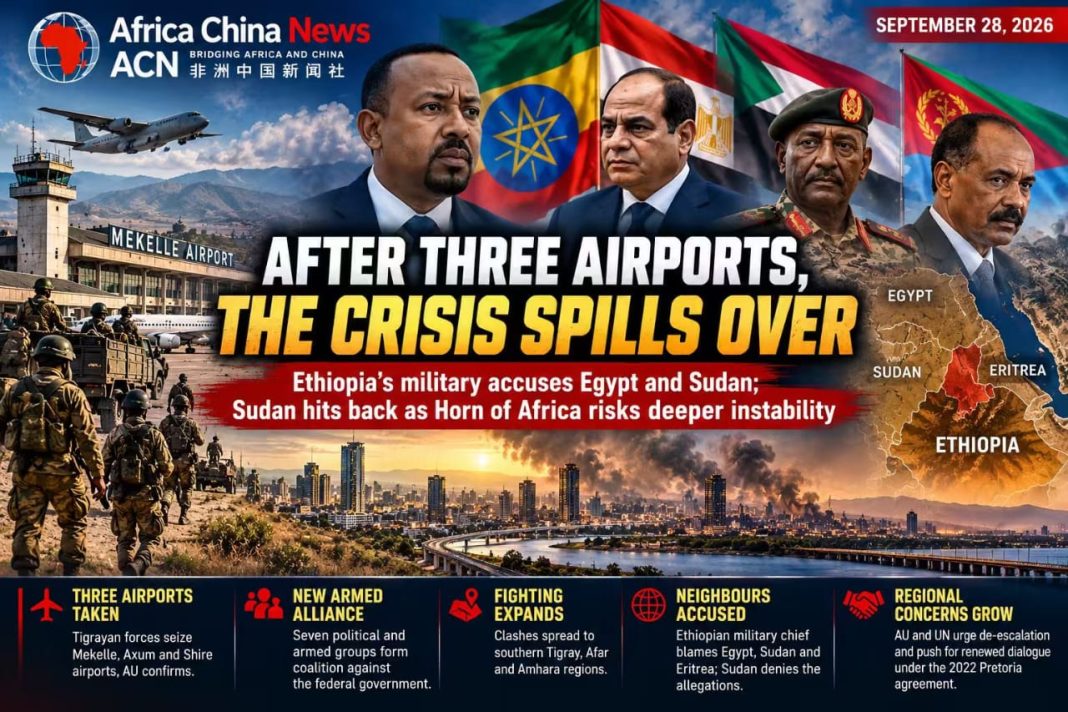

Tensions in Northern Ethiopia have continued to escalate following reports that Tigrayan forces took control of three airports in Mekelle, Axum and Shire, raising fresh concerns over the durability of the peace process and the risk of wider instability across the Horn of Africa.
The situation took on a broader regional dimension after Ethiopian military chief Field Marshal Birhanu Jula accused external actors, including Egypt and Sudan, of supporting groups opposed to the federal government. Sudan subsequently rejected the allegations.
The African Union earlier confirmed that Tigrayan forces had taken control of the three airports, while some federal personnel were detained and civilian aviation services were disrupted. The AU also reported an escalation of hostilities in parts of southern Tigray and the Afar region.
The AU said the developments were inconsistent with commitments under the 2022 Pretoria Cessation of Hostilities Agreement, which brought an end to two years of devastating conflict in northern Ethiopia. It called on all sides to exercise restraint and resolve their differences through dialogue.
The latest tensions come amid a changing political and security landscape inside Ethiopia.
Several political and armed groups, including the Tigray People’s Liberation Front, the Oromo Liberation Army and elements associated with Amhara’s Fano forces, have announced a new alliance opposed to Prime Minister Abiy Ahmed’s federal government.
However, significant differences remain among the groups in their political objectives, command structures and areas of operation, leaving uncertainty over the extent to which they could coordinate their activities.
Regional tensions have added another layer of complexity.
Birhanu Jula accused Egypt and Sudan of supporting forces seeking to challenge the Ethiopian government and also alleged Eritrean involvement.
Sudan’s armed forces rejected the accusations on Sept. 27, saying Khartoum does not interfere in the internal affairs of neighbouring countries and remains committed to protecting Sudan’s sovereignty and borders. Egypt has also denied involvement in Ethiopia’s latest unrest.
The allegations of external support have not been independently verified.
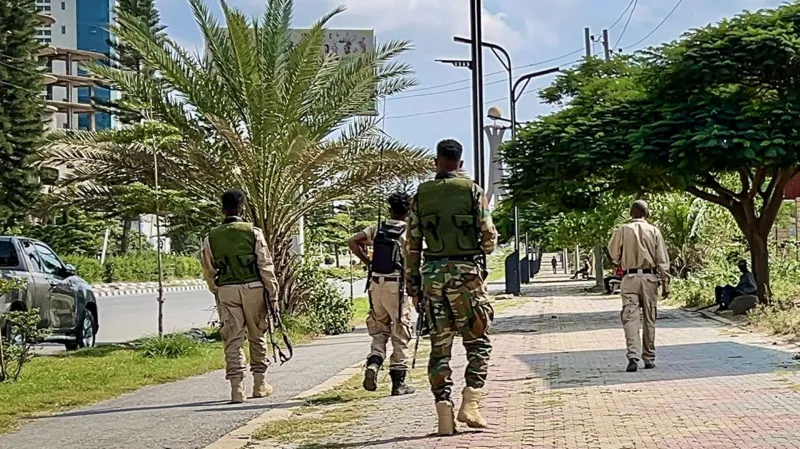
The developments come against the backdrop of longstanding regional disputes.
Ethiopia and Egypt have for years disagreed over Nile water resources and the Grand Ethiopian Renaissance Dam. Ethiopia and Sudan have faced their own border and security disputes, while relations between Addis Ababa and Eritrea have also shown renewed signs of strain.
The continuing conflict in Sudan has further complicated the regional security environment.
The combination of these pressures has raised concerns that renewed instability inside Ethiopia could have consequences beyond the country’s borders.
AU Commission Chairperson Mahmoud Ali Yousouf has called for immediate de-escalation and urged Ethiopia’s neighbours to avoid actions that could further aggravate tensions.
The AU has also asked former Nigerian President Olusegun Obasanjo to engage with the parties in an effort to revive dialogue within the framework of the Pretoria agreement. The United Nations has expressed concern over the deteriorating situation and backed the AU-led mediation effort.
Nearly four years after the Pretoria agreement ended large-scale fighting in northern Ethiopia, the seizure of the three airports, the emergence of new political and armed alliances and growing regional tensions are once again testing the country’s fragile peace process.