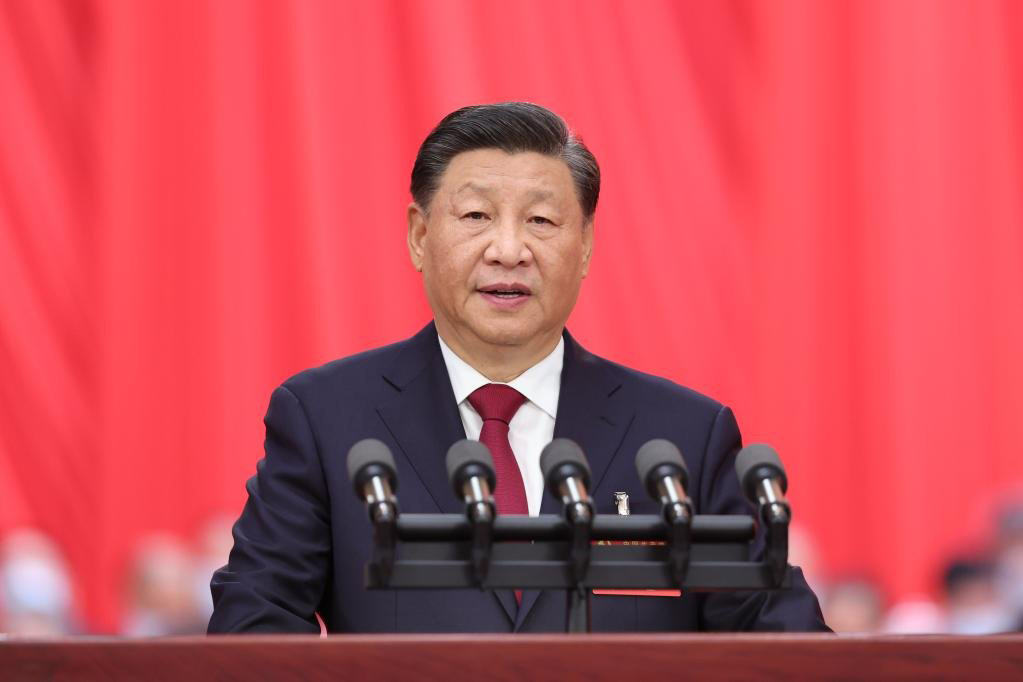

Xi arrived in the United States on Wednesday, September 23, for a three-day visit, with President Donald Trump receiving him alongside First Lady Melania Trump at Joint Base Andrews in Maryland.
The arrival featured a formal military ceremony, including an honour guard, red carpet, gun salute and the national anthems of China and the United States.
Xi was accompanied by his wife, Peng Liyuan, who also received a formal welcome.
The visit comes at a sensitive period in China-U.S. relations, with trade, technology, critical minerals, artificial intelligence and strategic issues expected to feature prominently in discussions between the two leaders.
The White House had earlier announced plans for a formal State Arrival Ceremony at the White House on Thursday, followed by talks between Xi and Trump and a state dinner.
According to the supplied report, the ceremony is expected to involve 479 military personnel representing the different branches of the U.S. Armed Forces, with military performances, a review and a flyover.
Beyond the ceremonial welcome, attention is expected to centre on the substance of the discussions and whether the two sides can maintain dialogue while addressing areas of disagreement.
Trade and economic relations remain particularly important, given the size of the Chinese and U.S. economies and their influence on global markets.
The talks are also expected to cover critical minerals and artificial intelligence, areas that have become increasingly important to global supply chains and technological development.
For African economies, developments in China-U.S. relations are significant because changes in global trade, investment, technology and commodity markets can affect countries across the continent.
Nigeria, in particular, has continued to pursue stronger economic and investment ties with China, including cooperation in infrastructure, manufacturing, energy, agriculture, technology and trade.
As Xi and Trump engage in Washington, attention will therefore extend beyond the immediate bilateral relationship to the wider global economy and the countries seeking investment, technology and stronger trade partnerships from both sides.
The key question now is whether the latest high-level engagement can translate into greater stability and continued economic cooperation between Washington and Beijing.