
By: Alameen Abdulkadir, PhD, Department of Political Science and International Relations, University of Abuja.
In the words of Confucious, “Is it not a delight to have friends come from afar?” A rhetorical question that was precisely facelifted by the Tang-dynasty poet, Wang Bo, when he said “A true friend in a far distance makes one’s home closer.” These sayings could floodlight the continuous China’s interest in partnership with Africa, which has continued to wax stronger year in, year on.
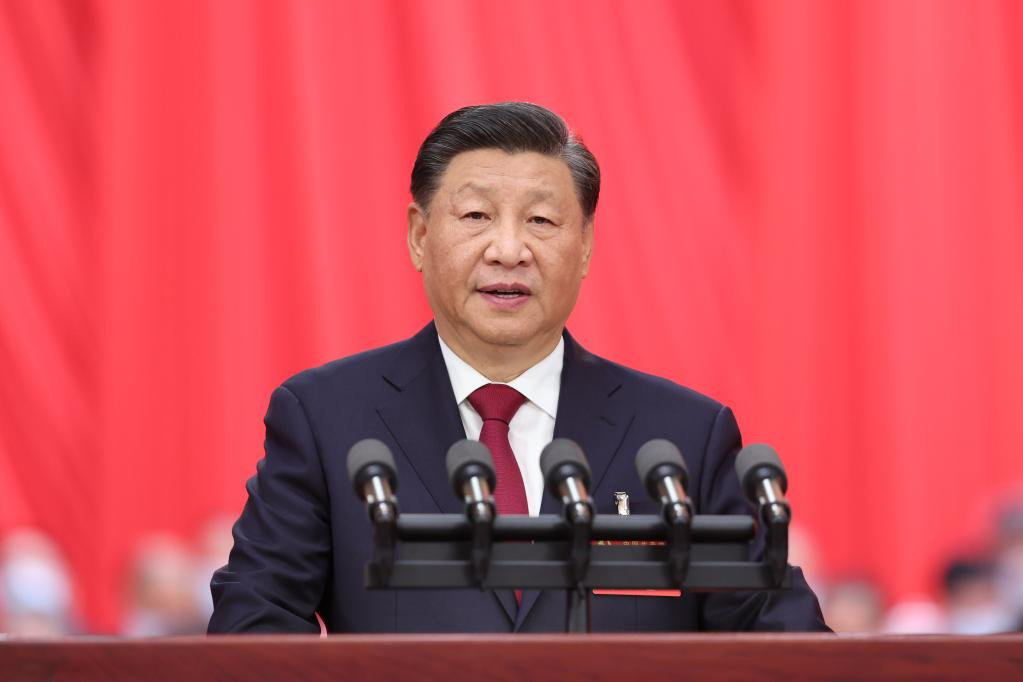
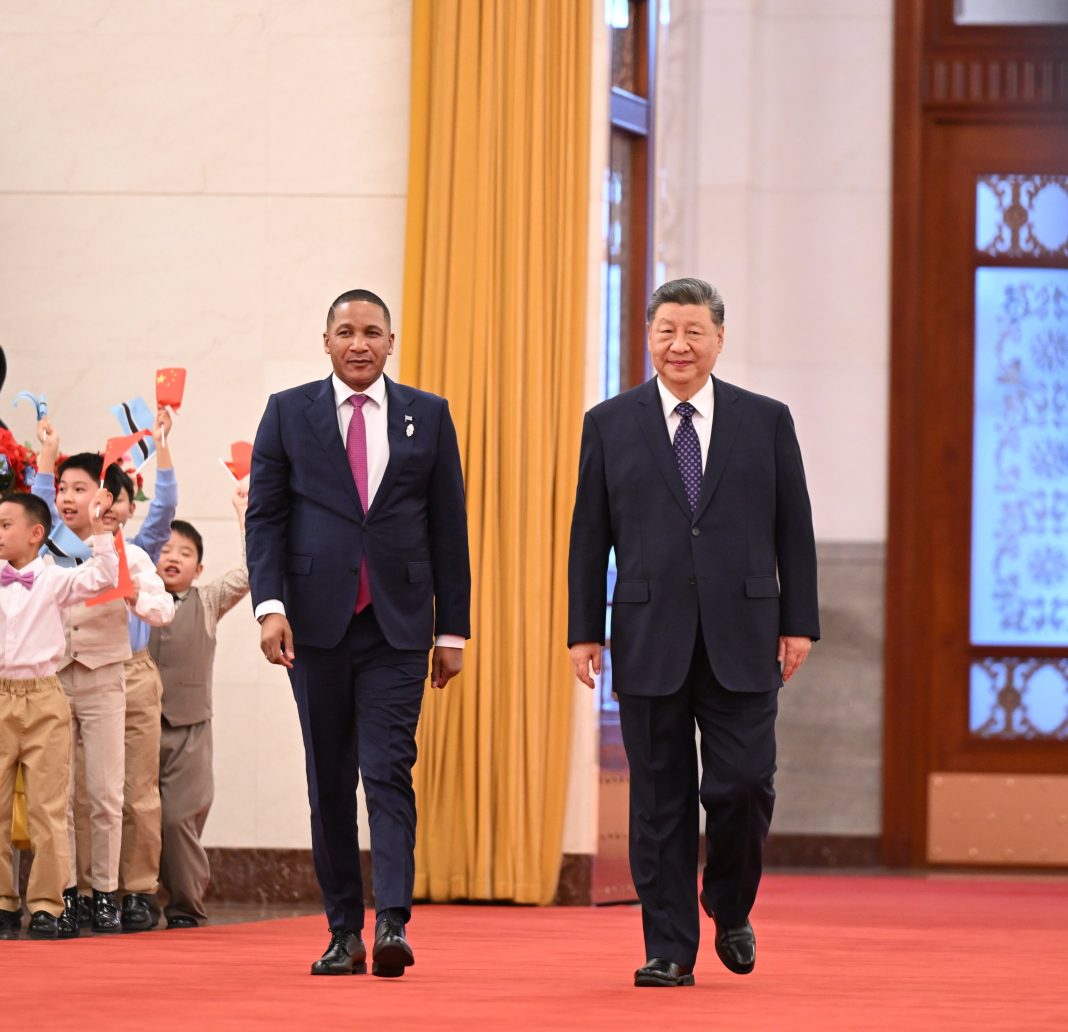
That philosophy got a renewed expression on 13 October 2026, when President Xi Jinping, during talks with Botswana’s President Duma Gideon Boko in Beijing, put forward a four-point proposition on China–Botswana and China–Africa mining cooperation. The intention rests on African ownership of resources, mutual benefit, high-quality development, and a fair and open investment environment.
At first glance, mining may appear a barely technical issue. In reality, it is one of the decisive arenas of Africa’s twenty-first-century development. The continent holds vast reserves of copper, cobalt, lithium, graphite, manganese, precious earth-elements and other minerals essential to the global energy transition. Yet the historical injustice remains stark: Africa has too often been locked into the lower rungs of global value chains, exporting raw materials while importing finished goods at considerably higher cost. President Xi’s proposition confronts this structural imbalance head-on by insisting that African resources belong to Africa and that cooperation must help African countries design mining stratagems that befits their national conditions.
The first principle that African resources belong to Africa is not merely diplomatic linguistic. It is a normative foundation for a more egalitarian international economic order. For too long, extractive relationships in Africa have been shaped by asymmetry: foreign capital, foreign technology and foreign markets on one side; land, labour, environmental risk and limited bargaining power on the other. China’s definite position is that African countries should determine how their mineral endowments are developed, with Chinese support presented for the formulation of nationally appropriate mining plans. This is important because resource sovereignty does not mean economic isolation. Rather, it means that African states must possess the institutional capacity, regulatory authority and negotiating self-confidence to convert mineral wealth into sustainable roads, schools, power plants, industries, jobs and long-term fiscal stability.
The critical question, however, lies in implementation. Sovereignty must be perceptible in transparent licensing, competitive bidding, environmental impact assessment, community consultation, local-content requirements and credible revenue management. African governments should therefore treat the principle of African ownership not as a catchphrase, but as a governance standard against which every mining agreement must be measured.
The second principle “a right approach to friendship and interests,” with mutual benefit at its centre speaks to the ethical core of China-Africa relations. China has pledged to encourage Chinese enterprises to improve operational capacity, transfer technologies appropriate to African conditions, support local employment and skills development, and deepen South-South cooperation in mining. This approach distinguishes itself from a purely transactional model of extraction. A genuine partnership should create African engineers, geologists, environmental scientists, logistics managers and industrial entrepreneurs. It should build local supplier ecosystems rather than confining African participation to low-wage labour and basic services. It should also ensure that mining communities share meaningfully in the benefits of the resources extracted from their land.
Critically, mutual benefit must be reciprocal and measurable. African partners should insist on clear commitments concerning technology transfer, local processing, employment quotas, training programmes, tax compliance, environmental restoration and community development. Chinese firms, for their part, should see such requirements not as obstacles but as the foundation of durable legitimacy. A mine that leaves behind degraded land, unresolved disputes and few transferable skills may generate short-term revenue, but it cannot produce lasting friendship.
The third principle high-quality development is arguably the most transformative. President Xi called for China-Africa mining cooperation to move toward industrial value addition, supported by affordable and sustainable financing models that can advance Africa’s modernisation. This is where the partnership can become genuinely historic. Africa does not merely need more mines; it needs refineries, smelters, battery-component plants, processing zones, research laboratories, standardisation institutions and export-oriented manufacturing. Botswana’s cooperation with China on sustainable mineral development, green mining and diamond-sector engagement illustrates how bilateral agreements can move beyond extraction toward value-chain development.
For Nigeria and other African economies, the lesson is clear: mineral wealth should become an entry point into industrialisation, not a substitute for it. Lithium should not simply leave African ports in raw form; it should support battery production, clean-energy manufacturing and digital-industrial clusters on the continent. Copper should feed electrification, construction and renewable-energy infrastructure. Critical minerals should power African factories, not merely foreign ones.
Nevertheless, value addition requires more than ambition. It demands reliable electricity, transport corridors, skilled labour, stable regulation, access to finance and regional markets under the African Continental Free Trade Area. China’s willingness to explore innovative and sustainable financing is welcome, but African governments must ensure that such financing strengthens, rather than strains, fiscal sustainability.
The fourth principle is perhaps the most strategically significant: Africa’s resources should not become instruments of geopolitical rivalry. President Xi stated that China would welcome genuine support for Africa’s development from all parties and would work with African countries to maintain a stable, predictable environment for investment and business operations. This position deserves careful attention. As global competition intensifies over critical minerals, Africa risks becoming a battleground for external powers seeking secure supply chains. Such competition can bring investment, but it can also reproduce dependency, distort prices, encourage opaque deals and weaken African policy autonomy.
The wisest African response is neither blind alignment nor reflexive suspicion. It is strategic pluralism: engaging China, Western economies, Gulf states, regional partners and multilateral institutions on terms defined by African priorities. Africa should welcome competition among partners when that competition improves technology transfer, financing terms, environmental standards and local value creation. But it should reject any arrangement that treats African sovereignty as negotiable.
The task ahead
China–Africa mining cooperation holds real promise. Its four-point framework offers a vocabulary of ownership, mutual benefit, quality development and openness that aligns with Africa’s developmental aspirations. Yet promises alone do not build refineries, train engineers, protect ecosystems or lift communities out of poverty. The success of this partnership will depend on African agency. Governments must negotiate firmly, regulate transparently and invest mineral revenues productively. Civil society, universities, labour unions and local communities must remain vigilant guardians of accountability. Chinese enterprises must match declaratory commitments with verifiable action on the ground.
If these conditions are met, the ancient wisdom of Confucius and Wang Bo will acquire contemporary meaning. Friends from afar will not merely visit Africa’s mineral fields; they will help build African industries, train African talents and expand African prosperity. In that sense, China–Africa cooperation can become more than a commercial relationship. It can become a disciplined, mutually beneficial partnership for a shared and sustainable future.