
By Professor Sheriff Ghali Ibrahim, Provost, Anti-Corruption Academy of Nigeria and Head of Contemporary China-Africa Research
Thousands of years ago, philosophers and scholars have attempted to succinctly capture the concept of peace and conflict in a generic, universal or ubiquitous analogy. The advocacies have been placed on the consequences of war or a descriptive approach to the imagery of the agony of war, particularly in counting the cost and or the impediments necissitated by war. The absence of peace could be manifest in the mind, familial, communal, national, regional, continental or universal settings.
Since 544-396 BCE, Sun Tzu in his ‘Art of War,’ believed that “There is no instance of a nation benefitting from prolonged warfare.” A couple of thousands of years later, Jean-Jacques Rousseau (1712-1778) described the aftermath of a battle in a way that shows that very little has changed: “I see fire and flames, a countryside deserted, villages pillaged. I bear witness to a murderous scene, to ten thousand slaughtered men, the dead piled together, the dying trampled… everywhere the sight of death and agony.” Immanuel Kant (1724-1804), believed that “the spirit of trade… cannot coexist with war,”
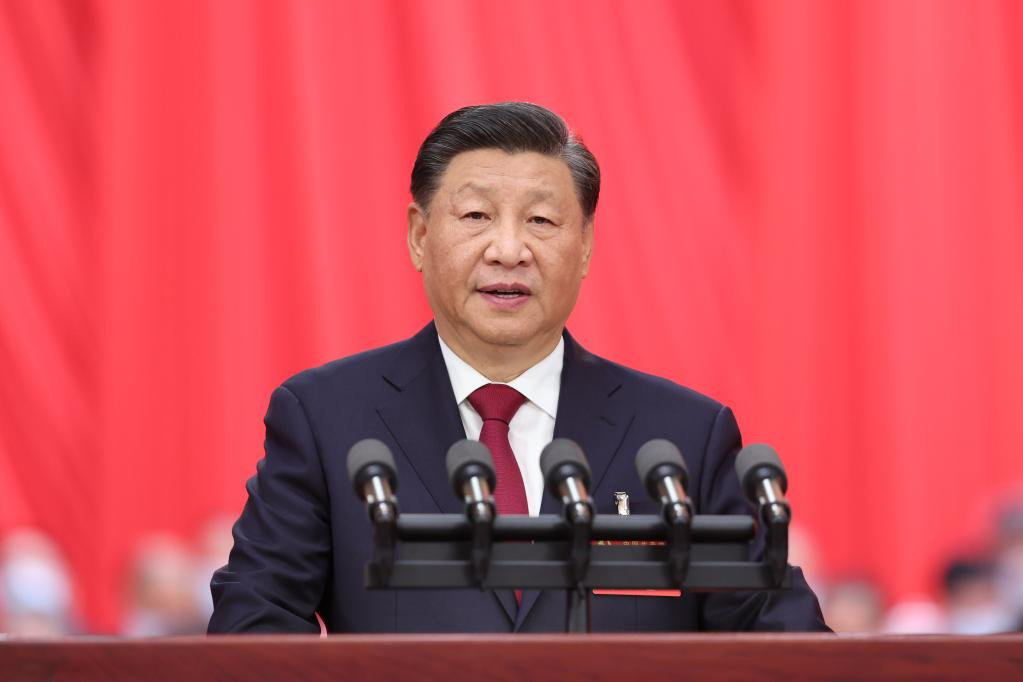
The rationale behind the above philosophical presentations, is to portray how president Xi Jinping has philosophically studied and rightly understand the plight of Africans, which is explicitly attached to instability due to incessant conflicts, terrorism, banditry, kidnapping and many more vices devastating the continent. In his words, President Xi called them the “hot spots.” These are the impediments retarding Africa’s unity, growth and development especially in this era when the continent desires cooperation and mutual integration for collective security and development.
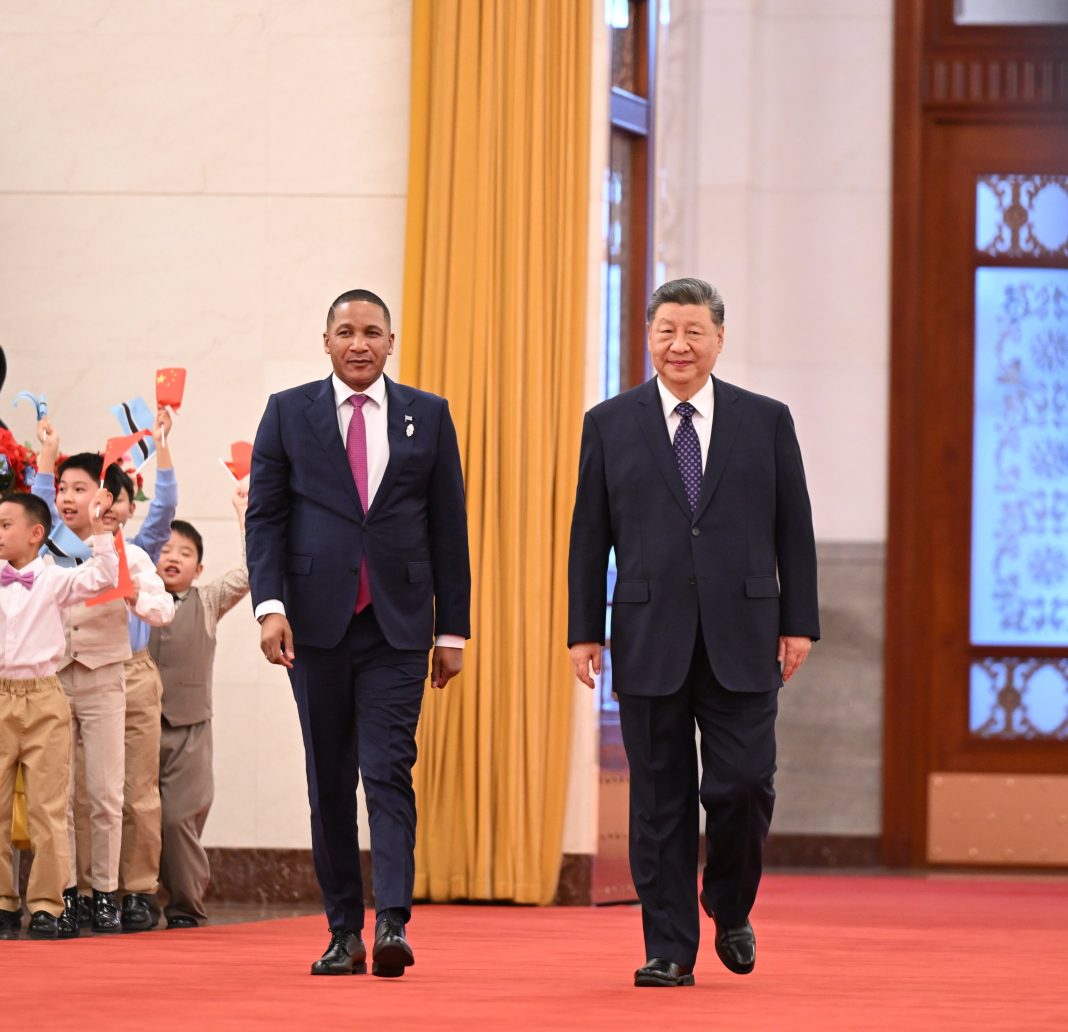
There is no prescriptive, traditional or institutional philosophical framework on Africa’s challenges that has recently captivated the minds of pundits, media and state actors like the Xi’s “theory of Africa’s hot-spots,” which is not only descriptive in methodology, but prescriptive on how the challenges can be solved. President Xi puts forward the four principles for the constructive participation of all parties in the settlement of hotspot issues in Africa, during his meeting with the President of the Council of Ministers of Togo, Faure Essozimna Gnassingbé, who is on an official visit to China, on 13 October, 2026. These principles are as follows:
First, is a tenet upon which Africa should stand on its feet and take charge of its continental affairs by avoiding external interference in what President Xi called adhering to the principle of “Africa-led.” The African people are the true masters of Africa and should play a central role in regional affairs. This principle was implicitly delivered in 2021, by Foreign Minister Wang Yi, when he chaired the Coordinators’ Meeting on the Implementation of the Follow-up Actions of the Eighth FOCAC Ministerial Conference in a virtual format. Minister Wang designated that the support China would give to this effect is perpetual support in “solving African issues in the African way, oppose interference by external forces in African countries’ internal affairs, and object to stoking confrontation and conflict in Africa.” what this entails is that Africa needs to grasp this developmental and stability prescription to heal from the long-delayed peaceful freedom that every region aspires to have for stable leadership, governance and economic development. Economic and political freedom must not capitulate and must be strengthened to give political identity, economic prosperity and to withstand the concurrent international uncertainties.
Second, upholding fairness and justice. All participating parties should abide by the purposes and principles of the United Nations Charter and respect the sovereignty and territorial integrity of the countries concerned. Wang Yi, once declared that, standing together in the face of a shifting international landscape, rising global challenges and recurring external disturbances, China and Africa vowed to enhance solidarity and cooperation, stay focused on development and win-win cooperation and safeguard justice and fairness, sending yet another strong message to the international community. If African countries will go by the Global Governance Initiative of President Xi, it suffices to uphold and commit to international law and embrace the principle of multilateralism. This is the pillar of togetherness and unity among African states.
Minister Wang Yi, once proposed that, China will continue to enhance China-Africa cooperation on peace and security. Without peace, development cannot be achieved; without development, peace cannot sustain. China attaches great significance to safeguarding peace and security in Africa and stands committed to playing a constructive role in this regard. In January 2022, China put forward the Outlook on Peace and Development in the Horn of Africa and followed this up with the appointment of a Special Envoy for the Horn of Africa Affairs.
Third, promoting ceasing hostilities for peace. Wars and unilateral sanctions cannot fundamentally resolve conflicts between countries. It is imperative to uphold mutual respect, conduct extensive consultations, seek common ground while shelving differences, and practice mutual understanding and accommodation. The tension involving Ethiopia, Eritrea, Somalia, Egypt etc should not transcend the room of political dialogue. The political imbalance between ECOWAS member-states and Association of the Sahel should have more meaningful political and regional settlement to bring back the three ceded states (Mali, Burkina Faso and Niger) back on track in the regional integration system.
In retrospect, Foreign Ministr Wangyi, during the Coordinators’ Meeting on the Implementation of the Follow-up Actions of the Eighth FOCAC Ministerial Conference held in Dakar, Senegal, posited that, China stands ready to work with Africa to implement in Africa the Global Security Initiative proposed by President Xi Jinping. In the next three years, China will undertake 10 peace and security projects for Africa. China will also follow through on measures such as the delivery of military aid to the AU and support the AU in realizing the “Silencing the Guns” initiative. China will readily share ideas and contribute strength for peace and stability in Africa.
Fourth, addressing both symptoms and root causes. Efforts should focus on immediate security while planning for long-term development. It is imperative to identify some of these precipitating factors that remain causational to long-trending conflicts and insecurity in Africa, which President Xi sees as indispensable to be traced and solved. First , it is the colonial legacy and artificial state formation, which was crafted without due consideration to ethnic, cultural, and historical attachments. This has ctreated forced amalgamation of divergent ethnic groups, produced weak national idntity and created boundary disputes in Africa. These need to be looked into especially through the African Union for plebiscites and border adgustments of the regions to have more ethnic and cultural structuration and to fit historical realities.
Weak Governance is a causational factor to African conflicts and insecurity. Weak governance involves corruption and lack of acountability; electoral fraud and disputed elections. This is as well complemented by authoritarian leadership, that has distablized the continent.
Economic Inequality and Poverty, has resulted in unemployment. It is unequivocal that unequal distribution of resources contribute significantly to conflict. Youth unemployment fuels recruitment into armed groups. Perceived economic marginalization leads to grievances, and competition over scarce resources intensifies tensions. Democratic institutions need to be strengthened, poverty has to be reduced significantly, and inequality must be reduced in Africa.
Ethnic and Religious Divisions. Political elites manipulate identity for power. Communal clashes arise over land, power, and recognition. There is the need for dialogue, tolerance, and inclusive governance for Africa to exit these ugly doors to conflict.
Competition over natural Resources. Africa is rich in natural resources, yet this wealth has often fueled conflict. Oil, diamonds, gold, and land become sources of conflict, armed groups fight to control resource-rich areas, environmental degradation intensifies local tensions.
Weak State Institutions. Many African states struggle with Ineffective judicial systems, Weak security forces, external Influences and International Factors through Arms supply, foreign intervention, economic exploitation and global geopolitical interests, which can prolong local conflicts. Environmental factors and climate change create yet another vacum for conflict in Africa, especially by desertification and drought. This hinders the peace between herders and farmers in Africa.
In conclusion, Africa has got a caveat, flash-points identified, and solutions proferred. The African Union has an obligation, African leaders and regional blocs are all stakeholders to implementing the recommendations and to partner with China in mediation, reconciliation and peace settlements. This can abate and bring tensions and many conflicts to an end.