
By Prof. Sheriff Ghali Ibrahim
The rhetoretical questions always asked by President Xi Jinping are all-encompassing particularly within the framework of international relations and politics. “what is wrong with the world? Where are we coming from? Where are we now? And where are we headed to? Some of the complementary questions are: Why are states irrational? Why do states cause doom against their existence and why are experienced nations not influencing the inexperienced ones to be calm and choose the peaceful path?
These questions are trigered by the dumbness of Taiwanese leadership in continuing the annual Military Drills called Han Kuang which they started since April, 1984, by General Hau Pei-tsun, to test the joint combat readiness, command flexibility, and defense strategies against what Taiwan called “potential invasions from China.” In contemporary military strategy, there is no rationality, there is no intelligence and there is no in-depth calculation by Taiwan to dream of protecting itslf against China. China is not a threat to Taiwan, but reverse is the case, as Taiwanese leaders are fixated to be seperatists and conspire with external forces against China.
When Han Kuang (the annual Military Drills) started in 1984 as a comprehensive War game and field exercise for Taiwan’s armed forces, it focused initially on classic beach anti-landing, anti-airborne, and counter-air raid scenarios. It also established the core two-phase format: a spring computer-simulated Command Post Exercise (CPX) and subsequent Field Training Exercises (FTX).
This vision of pushing China back and creating a shield and a safety-net against China, integrated high-tech hardware additions like Patriot missile deployments starting around 2006 by Taiwan. It Shifted operational concepts to reflect shifting political and strategic defense doctrines under successive administrations and adopted bilingual command formats (Mandarin and English) by 2017 to improve joint clarity, all aimed at defeating China in case of an abrupt eruption of conflict.
Taiwan was further pushed to expanded drill duration significantly, moving from traditional 5-day windows to extended 10-day live-combat simulations, which also increased reserve force mobilization and from modern conflicts like the Russia-Ukraine war. This has made Taiwan oblivious of the enormity of the Russo-Ukrainian conflict!
Due to continuous China-phobia developed by Taiwan in which external forces have informed Taiwan on the necessity to significantly prepare for war against China, it incorporated advanced mobile rocket systems (HIMARS) and decentralized command backbrief methods modeled on partner military frameworks, presumably that will protect them from China’s bid for reunification.
The next question is who has been behind Taiwan’s military ambition? Who has continued to sell weapons to Taiwan? Who has vowed to defend Taiwan in its quest to be permanently independent from China? Those behind the curtains are recently victims of their choice emanating from a war of choice and loosing from a strategy of choice. If the United States cannot protect itself in a modern warfare strategy, especially in its war with Iran, why should Taiwan continue to uphold provocative annual Military Drills that cannot protect them, but create more distance and disharmony from China’s efforts of peaceful reunification?
The United States has failed to achieve its strategic objectives and has faced outright defeat in Vietnam War, the War in Afghanistan, the Korean War (strategic stalemate), the Bay of Pigs Invasion, and the Lebanese Civil War intervention. The goal in Vietnam was to stop the spread of communism in Southeast Asia and protect South Vietnam, but high local resistance, a strong guerrilla insurgency, and low public support at home forced a U.S. withdrawal. North Vietnam took over the south in 1975.
The U.S. tried to destroy Al-Qaeda and remove the Taliban from power after the September 11 attacks, but after 20 years of conflict and nation-building, the Western-backed government collapsed rapidly, and the Taliban returned to power during the chaotic U.S. military exit in August 2021. The U.S. goal in Korea was to expel North Korean forces from South Korea and unify the entire Korean Peninsula under a democratic government, but Chinese military intervention pushed U.S. and United Nations forces back, resulting in a bloody stalemate and an armistice that left the peninsula permanently divided.
The U.S. attempted to overthrow the communist government of Fidel Castro in Cuba using CIA-trained Cuban exiles, but the invasion was poorly planned, lacked expected U.S. air support, and was quickly crushed by Cuban armed forces, becoming a major Cold War embarrassment for Washington. The U.S. intended to restore political stability and peace during the Lebanese Civil War as part of a multinational peacekeeping force, but following the devastating 1983 Beirut barracks bombing that killed 241 U.S. service members, the U.S. withdrew its military forces without achieving its stabilization goals.
The question remains, is it not irrational for Taiwan to continue with its annual Military Drills? Can the U.S. battling with shortage of Missiles and defensive capability salvage Taiwan in the period of war? Answers are self-providing for the wise.
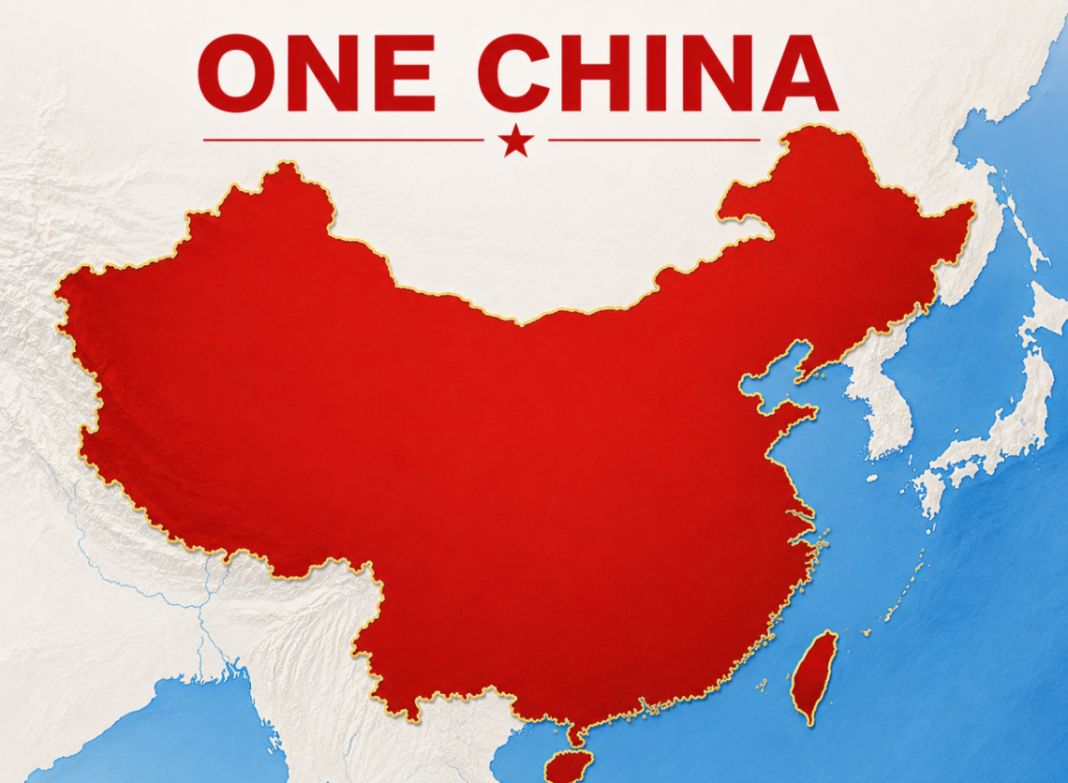
In conclusion, it is recommended that Taiwan accepts China’s extended hand of peaceful reunification and desist from carrying out provocative Military Drills that will deteriorate the concurrent condition. It should divorce external tools of influence that sway its leadership to miscalculated risks and return to the mother land for good.
Prof. Sheriff Ghali Ibrahim is the Provost, Anti-Corruption Academy of Nigeria and Head of Contemporary China-Africa Research