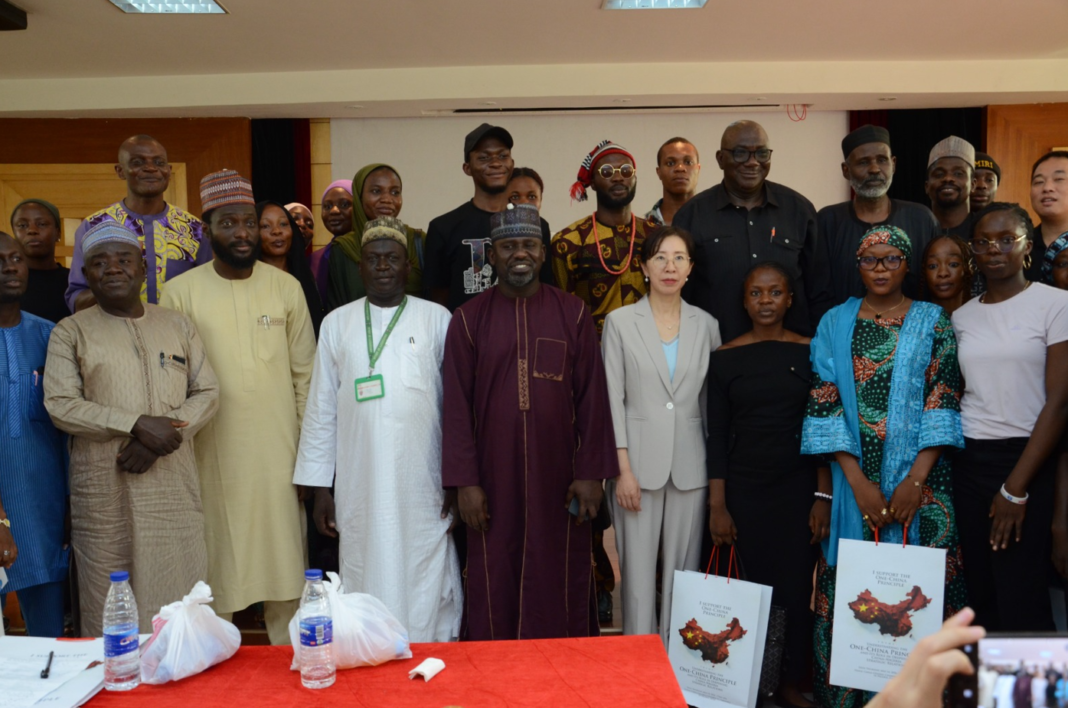

Stakeholders in diplomacy, academia and media have reaffirmed Nigeria’s commitment to the One-China Principle, describing it as the foundation of the enduring strategic partnership between Nigeria and the People’s Republic of China.
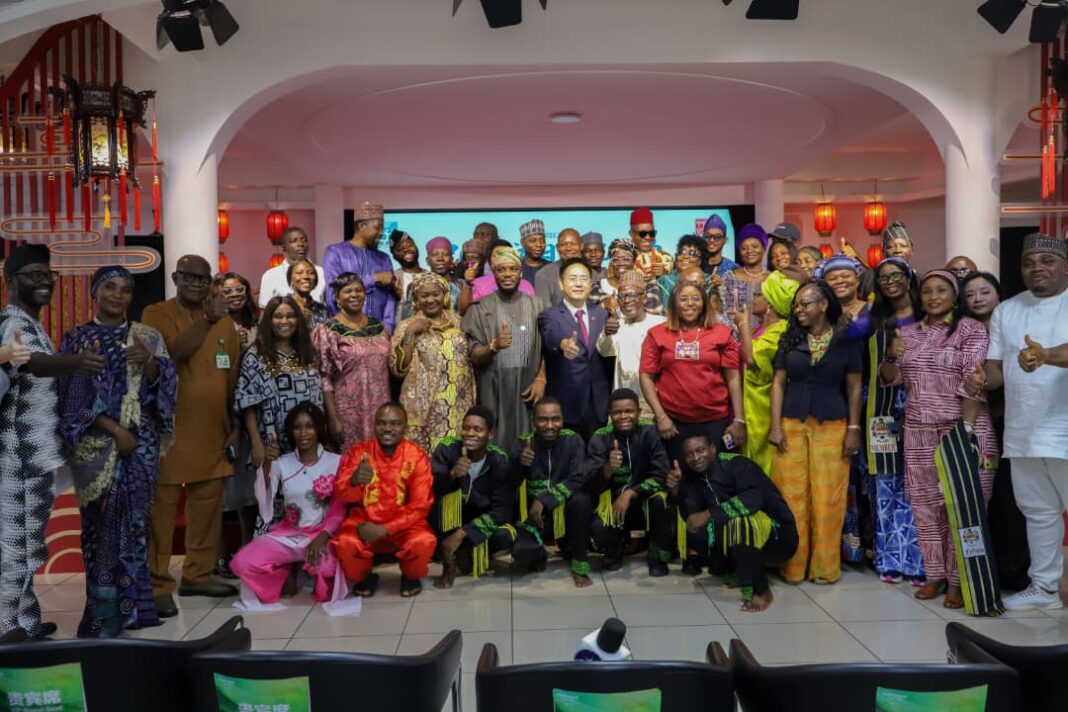
The position was reiterated during a Media Salon on the One-China Principle held at the China General Chamber of Commerce in Nigeria, Abuja, under the theme: “Understanding the One-China Principle and Its Role in Deepening China–Nigeria Strategic Relations.”
The event was organised by the Centre for China Studies and the Centre for Contemporary China-Africa Research in collaboration with the Chinese Embassy in Nigeria.
In her remarks, Dong Hairong, Counsellor at the Chinese Embassy in Nigeria, said the international community must maintain clarity on the Taiwan question and resist what she described as “deceptive propaganda” by Taiwan authorities pushing for independence.
She stressed that Taiwan has historically been part of China and that the People’s Republic of China remains the sole legitimate government representing all of China under international law and United Nations Resolution 2758.
According to her, attempts by Taiwan’s leadership to expand what he called separatist activities undermine international consensus and threaten regional stability.
The Chinese envoy also referenced recent developments involving Taiwan leader Lai Ching-te, including a visit to Eswatini and engagements involving some Nigerian journalists with Taiwanese officials, warning against actions that could contradict Nigeria’s long-standing adherence to the One-China Principle.
She noted that Nigeria has consistently reaffirmed its recognition of the People’s Republic of China as the only legitimate government of China since diplomatic ties were established in 1971.
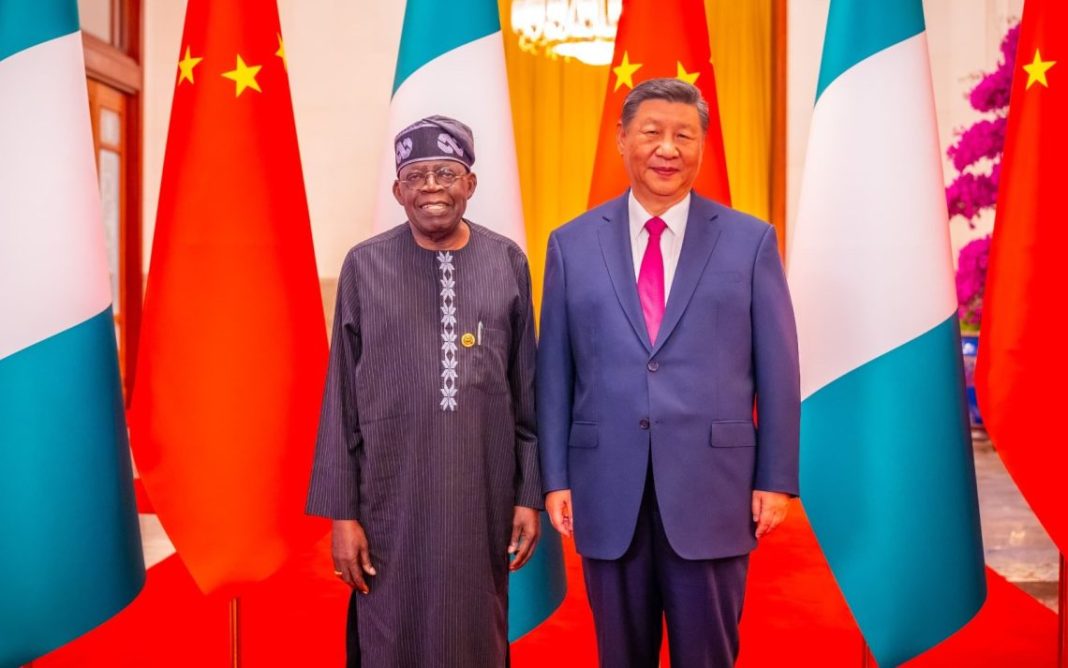
Dong Hairong recalled that during President Bola Ahmed Tinubu’s state visit to China in September 2024, Nigeria reiterated its support for China’s sovereignty and territorial integrity, including recognition of Taiwan as an inalienable part of China.
The counselor said the One-China Principle remains the political bedrock of China-Nigeria relations, which he noted have grown into a comprehensive strategic partnership with expanding economic and infrastructural cooperation.
Highlighting recent cooperation, she cited the handover of the new Economic Community of West African States headquarters complex in Abuja, built with Chinese assistance, as well as China’s implementation of zero-tariff treatment for exports from 53 African countries with diplomatic ties to Beijing, including Nigeria.
She explained that the policy would provide broader access for Nigerian agricultural products such as sesame, ginger, cocoa and cashew nuts into the Chinese market.
Dong Hairong urged Nigerian journalists to adopt objective and accurate terminology in reporting Taiwan-related issues, warning against descriptions that imply Taiwan is a sovereign state.
Speaking at the event, Prof. Sheriff Ghali Ibrahim, Director of the Centre for Contemporary China-Africa Research, described global support for the One-China Principle as overwhelming, noting that 53 out of 54 African countries recognise Beijing.
He argued that Taiwan is not a sovereign state under international law and said the majority of countries across Africa, Asia, Latin America and other regions support the position that there is only one China.
Prof. Ghali commended China’s approach to the Taiwan issue, describing Beijing as patient in pursuing peaceful reunification despite long-standing political differences across the Taiwan Strait.
According to him, successive Chinese leaders from Mao Zedong to Xi Jinping have consistently promoted peaceful reunification under the “One Country, Two Systems” framework.
He also criticised Eswatini for maintaining diplomatic relations with Taiwan, expressing optimism that the Southern African kingdom would eventually align with the broader African consensus supporting Beijing.
On his part, Prof. Sam Amadi provided a broader diplomatic and legal interpretation of the One-China Principle and the One-China Policy, explaining that while they are often used interchangeably, they differ in meaning and application.
He explained that the One-China Principle reflects Beijing’s position that there is only one China under the sovereignty of the People’s Republic of China, while the One-China Policy represents how other countries acknowledge and manage relations around that position.
Amadi noted that many countries maintain what he described as “strategic ambiguity,” acknowledging Beijing diplomatically while still engaging Taiwan economically and commercially.
He argued that African countries should avoid formal diplomatic relations with Taiwan while carefully calibrating trade and investment engagements to ensure they do not contradict international law or existing commitments to Beijing.
The legal scholar acknowledged China’s growing developmental footprint across Africa, especially in infrastructure and regional integration projects, noting that China has emerged as one of Africa’s most significant development partners in recent decades.
He, however, cautioned against what he termed “sovereignty for rent,” alleging that some countries recognise Taiwan in exchange for economic incentives.
Other speakers, including Charles Onunaju, Segun Showunmi and Prof Mukhtar Imam, called for stronger public understanding of the One-China Principle and deeper cooperation between Nigeria and China in trade, infrastructure, cultural exchanges and diplomatic engagement.