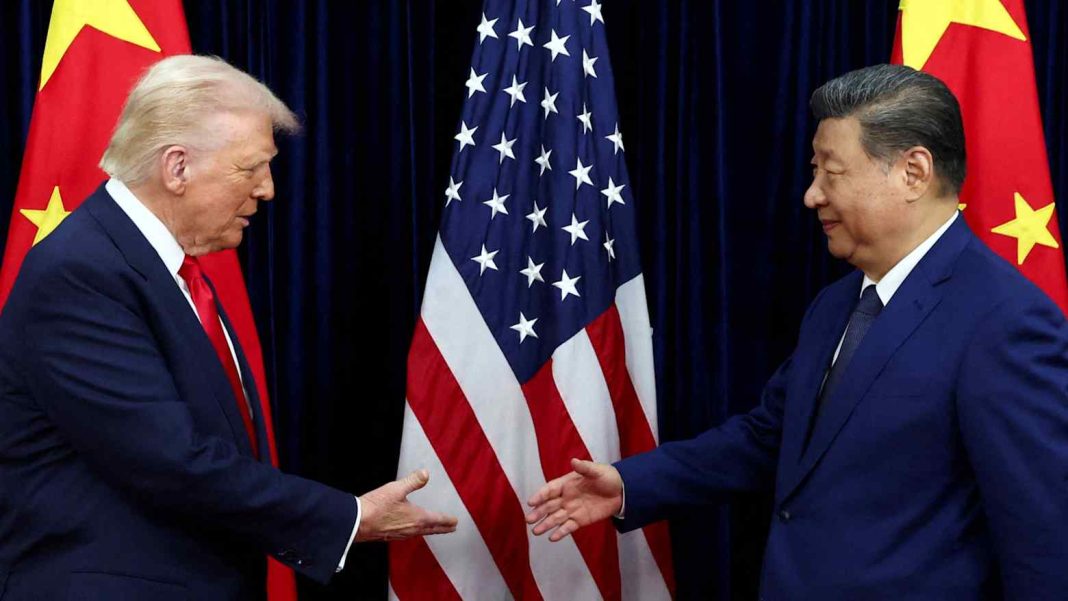

China and the United States are stepping up diplomatic engagement ahead of an expected meeting between President Xi Jinping and U.S. President Donald Trump, with trade, technology and broader geopolitical issues likely to dominate the discussions.
The latest movement came on Thursday, September 17, when Chinese Foreign Minister Wang Yi spoke by phone with U.S. Secretary of State Marco Rubio as both sides prepared for further high-level engagement.
Diplomats Prepare the Ground
Wang and Rubio discussed future high-level interactions between Beijing and Washington, according to Chinese officials.
Wang stressed the importance of maintaining communication based on equality, mutual respect and reciprocity. He also highlighted the role of direct engagement between the two presidents in managing the wider China-U.S. relationship.
The conversation comes as preparations intensify for Xi’s expected visit to Washington.
President Trump has said Xi will meet him at the White House on September 24. However, Beijing had not formally confirmed the visit in Thursday’s latest account.
Trade and Technology in Focus
The expected summit comes at a sensitive point in the economic relationship between the world’s two largest economies.
Trade remains a major issue, while technology and artificial intelligence are emerging as increasingly important areas of competition and negotiation.
U.S. officials have indicated that AI-related concerns could feature in upcoming discussions, alongside trade and other economic issues.
The two countries are also navigating disagreements over advanced computer chips, technology restrictions and access to critical supply chains.
Taiwan and Global Security
Beyond economics, the relationship carries wider geopolitical implications.
Taiwan remains one of the most sensitive issues between Washington and Beijing, while developments in the Middle East and other international crises are also adding pressure to the relationship.
The upcoming engagement therefore comes at a time when decisions made by the two governments could have consequences well beyond their bilateral relationship.
Why Africa Is Watching
Any major shift in China-U.S. relations could have implications for African economies.
China is a major trading and investment partner for many African countries, while the United States remains an important market, investor and development partner.
Changes in tariffs, technology rules, global supply chains or commodity markets could therefore affect African exporters and businesses.
For Nigeria and other African economies, developments from Washington and Beijing are particularly important as countries seek to attract investment, expand trade and strengthen their positions in global supply chains.
The September 24 meeting, if confirmed as planned, will therefore be closely watched not only for its impact on China-U.S. relations but also for what it could mean for the wider global economy.