
By Michael Onjewu
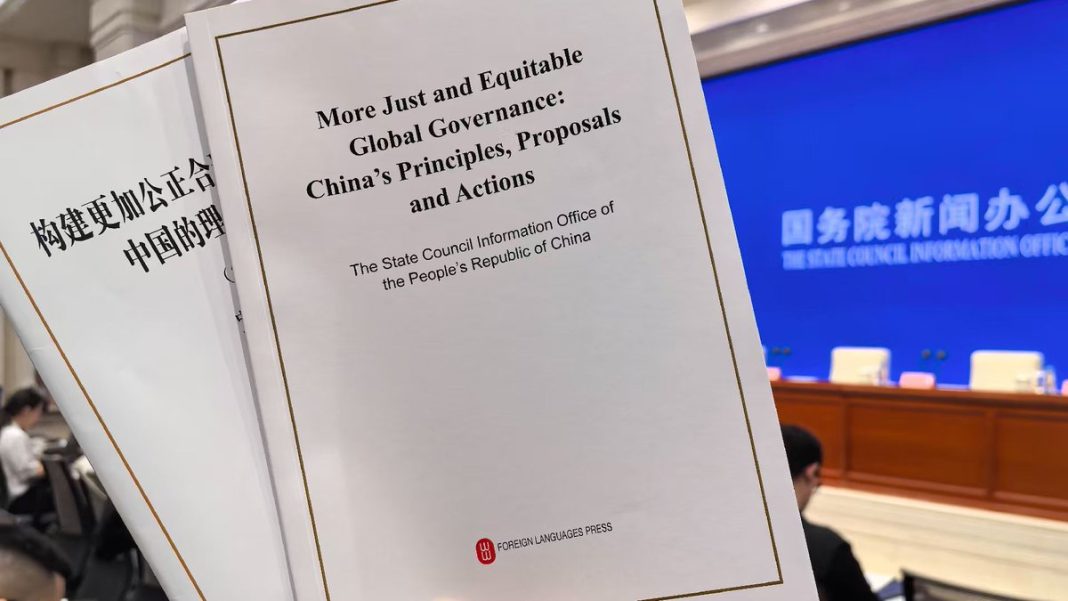
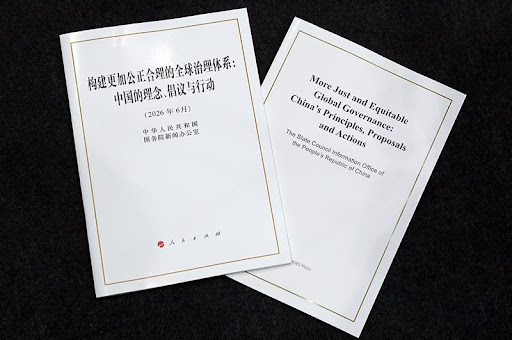
The release of the white paper titled “More Just and Equitable Global Governance: China’s Principles, Proposals and Actions” by China’s State Council Information Office on June 17, 2026, marks an important contribution to contemporary debates on the future of international relations and global governance.
At a time when the world faces geopolitical tensions, widening development gaps, protectionism, climate challenges, technological disruptions, and growing distrust in multilateral institutions, the document offers a comprehensive vision for reforming global governance in a manner that is more representative, inclusive, and development-oriented.
For developing countries and the broader Global South, the white paper carries particular significance. It not only identifies structural inequalities within the existing global governance architecture but also proposes practical pathways for ensuring that developing nations become active participants rather than passive observers in shaping the future international order.
The white paper presents the Global Governance Initiative (GGI), proposed by Chinese President Xi Jinping, as a framework for building a more just and equitable international system. It argues that the world is experiencing profound changes characterized by growing conflicts, economic fragmentation, climate pressures, technological inequalities, and governance deficits.
At its core, the initiative is built around five principles: Sovereign Equality, International Rule of Law, Multilateralism, A People-Centered Approach and Real Actions. These principles reflect a belief that global governance should not be dominated by a handful of powerful nations but should instead be based on consultation, joint contribution, and shared benefits. The white paper emphasizes that all countries, regardless of size, wealth, or military strength, deserve equal participation in international affairs.
Perhaps the most significant aspect of the document is its recognition that the current global governance system suffers from representation deficits. Developing countries remain underrepresented in major global institutions, while many critical decisions affecting billions of people are still made without adequate Global South participation. The white paper therefore advocates reforms that would amplify the voices of emerging economies and developing nations in institutions such as the United Nations, the International Monetary Fund, the World Bank, and other multilateral bodies.
The document arrives at a time when calls for reform are becoming louder across Africa, Asia, Latin America, and the Pacific. For many nations of the Global South, the white paper represents an acknowledgment of long-standing grievances and a proposal for correcting historical imbalances in international governance.
Why the Global South Matters More Than Ever
One of the strongest arguments contained in the white paper is that the rise of the Global South has fundamentally transformed the international landscape.
Today, the Global South accounts for more than 60 percent of the global economy in purchasing power parity terms and contributes approximately 80 percent of global economic growth. The world’s economic future increasingly depends on developing countries. Yet global institutions have not evolved at the same pace.
The white paper correctly notes that monopolization of international affairs by a small group of countries is no longer sustainable. As emerging economies become major contributors to global growth, they naturally demand a greater role in setting international rules, standards, and priorities.
For Africa in particular, this presents a historic opportunity. Home to the world’s youngest population and vast untapped economic potential, the continent seeks not charity but partnership, investment, technology transfer, and fair representation. The most immediate implication of the GGI for developing countries is the promise of a more inclusive international system.
First, the initiative supports greater representation for developing nations in global decision-making. China’s support for the African Union’s admission as a permanent member of the G20 in 2023 demonstrated this commitment in practice. By securing a seat at one of the world’s most influential economic forums, Africa gained a stronger platform to shape discussions on debt sustainability, climate finance, global trade, and development priorities.
Second, the initiative places development at the center of global governance. Rather than treating development as a secondary issue, the GGI recognizes it as the foundation of peace, stability, and prosperity. This approach resonates strongly with African countries, where infrastructure deficits, energy shortages, food insecurity, and unemployment remain pressing concerns.
Third, the initiative seeks to bridge the digital divide and ensure that developing countries participate in shaping rules governing emerging technologies such as artificial intelligence, cyberspace governance, and green innovation. This is particularly important as the Fourth Industrial Revolution reshapes economies and societies across the world. Without inclusive governance mechanisms, developing nations risk being left behind.
Fourth, the GGI advocates reform of international financial institutions and supports efforts to address historical injustices suffered by Africa. China’s position that African demands should receive priority attention in discussions on UN Security Council reform reflects growing recognition that global governance must better reflect contemporary realities.
From Vision to Action: The Importance of the Fifth Principle
Among the five pillars of the Global Governance Initiative, the principle of “Real Actions” deserves special attention.
In many international forums, ambitious declarations often fail to translate into meaningful results. The GGI seeks to overcome this challenge by emphasizing measurable outcomes and practical cooperation. The initiative promotes a problem-solving approach focused on addressing the concrete needs of developing countries rather than merely issuing statements.
For Africa, this principle is particularly relevant because development cannot be achieved through rhetoric alone. Roads, railways, ports, power plants, schools, hospitals, and digital infrastructure require investment, expertise, and long-term commitment. The emphasis on tangible outcomes, therefore, represents a shift from promises to implementation.
Tangible Outcomes of China-Africa Cooperation
The significance of the white paper becomes even clearer when viewed through the lens of China-Africa cooperation.
The China-Africa partnership, which traces its roots to the Bandung Conference of 1955, has evolved into one of the most extensive examples of South-South cooperation in modern history. Institutionalized through the Forum on China-Africa Cooperation (FOCAC) since 2000, the partnership has increasingly focused on practical development outcomes.
At the 2024 FOCAC Summit in Beijing, China pledged $60 billion in financing support for Africa, including $15 billion in grants and interest-free loans aimed at infrastructure, agriculture, industrialization, digital transformation, and green development.
Across the continent, Chinese-supported projects have transformed connectivity and economic integration. Infrastructure investments have contributed to the construction of more than 10,000 kilometers of railways and approximately 100,000 kilometers of highways, facilitating trade and regional integration.
In Nigeria, Chinese financing and technical support have contributed to the construction of the Abuja–Kaduna and Lagos–Ibadan railway lines, as well as the development of the Lekki Deep Sea Port, which is strengthening the country’s logistics and trade capacity. Beyond Nigeria, China has supported the revitalization of the Tanzania–Zambia Railway (TAZARA), financed the development of the Bagamoyo Port in Tanzania, and provided funding for the Chad–Sudan Railway to enhance regional connectivity. In East Africa, the Mombasa–Nairobi Standard Gauge Railway in Kenya has significantly improved transportation efficiency, while Ethiopia’s Addis–Djibouti Railway has become a critical trade corridor linking the landlocked country to international markets through the Port of Djibouti.
Human capital development has also been a major component of cooperation. More than 120,000 Africans have benefited from vocational training and capacity-building initiatives, including the establishment of Luban Workshops that provide technical education and skills training aligned with industrial development needs.
China has likewise become a consistent advocate for Africa on the global stage, supporting greater African participation in international institutions and promoting reforms that enhance the continent’s voice in global affairs.
Zero-Tariff Access: A Game Changer for African Exports
Among the most consequential recent measures highlighted in the broader framework of China-Africa cooperation is China’s decision to implement comprehensive zero-tariff treatment for African countries that maintain diplomatic relations with Beijing. This initiative carries profound implications for African economies, including Nigeria.
By eliminating tariffs, China has effectively lowered barriers for African products entering one of the world’s largest consumer markets. African exports such as sesame, ginger, cashew nuts, cocoa, agricultural products, and processed goods can now access the Chinese market more competitively, provided they meet quality and regulatory standards.
The policy creates incentives for producers to improve quality standards, enhance value addition, strengthen branding, and move up global value chains.
Furthermore, predictable access to the Chinese market can attract domestic and foreign investment into agriculture, food processing, mineral beneficiation, logistics, and manufacturing. Such investments can stimulate industrialization, generate employment, increase export earnings, and contribute to poverty reduction.
For Nigeria and other African countries seeking to diversify their economies away from excessive dependence on raw commodity exports, the zero-tariff initiative offers a strategic opportunity.
A Shared Future for Development
The Global Governance Initiative White Paper arrives at a critical moment in international affairs. It recognizes that global challenges require collective solutions and that sustainable progress cannot be achieved if the voices of the majority of humanity remain marginalized.
For developing countries and the Global South, the document offers both a critique of existing inequalities and a roadmap for reform. More importantly, it is accompanied by examples of practical cooperation, particularly in Africa, where investments, infrastructure projects, capacity-building programs, and market access initiatives demonstrate how governance principles can be translated into tangible development outcomes.
Whether one views the initiative through the lens of diplomacy, development, economics, or international relations, its central message is clear: the future of global governance must be more representative, more equitable, and more action-oriented.
For Africa, and for countries such as Nigeria, the challenge now is to seize the opportunities presented by this evolving landscape; leveraging partnerships, expanding trade, strengthening institutions, and ensuring that the continent’s growing voice contributes meaningfully to the construction of a fairer international order.
In a world increasingly defined by interdependence, the success of global governance will ultimately be measured not by declarations made in conference halls, but by the extent to which ordinary people experience improved livelihoods, greater opportunities, and a more just share of global prosperity.
Michael Onjewu is a journalist based in Abuja