

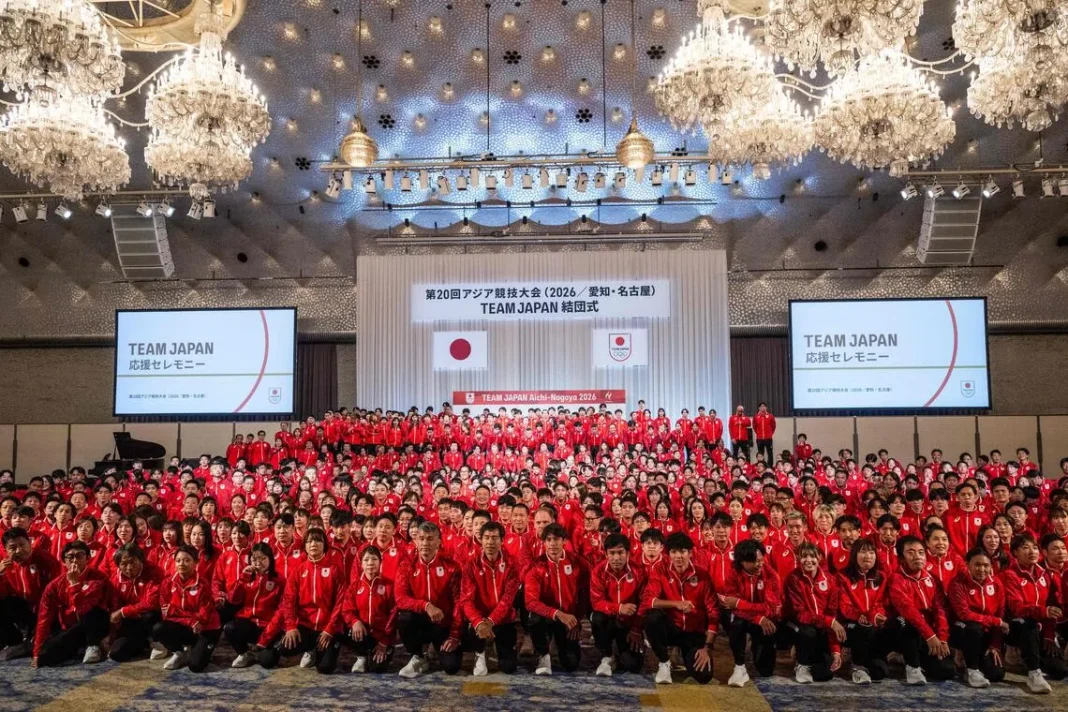

As thousands of athletes arrive in Japan for the 2026 Asian Games, organisers are facing an unusual challenge: where to accommodate more than 17,000 athletes and officials without building a traditional Athletes’ Village.
The Aichi-Nagoya Asian Games officially open on September 19, bringing together more than 11,000 athletes from 45 countries and regions across 43 sports.
But this year’s Games are taking a very different approach to accommodation.
No Traditional Athletes’ Village
Japan initially planned to provide a dedicated Athletes’ Village but eventually abandoned the idea as organisers sought to control costs and avoid leaving behind a large facility with limited use after the Games.
Instead, athletes and officials are being housed across hotels, temporary wooden container-style facilities and a cruise ship.
The Costa Serena, a 290-metre Italian cruise ship, has been docked at Nagoya and is expected to accommodate thousands of participants as different competitions begin and end.
Temporary wooden units at the port are also being used to house athletes.
The Olympic Council of Asia has defended the arrangement, arguing that building a permanent village would have created significant costs and raised questions about what would happen to the facility after the Games.
Accommodation Problems Emerge
The cost-saving strategy has nevertheless created difficulties.
Some athletes have complained about cramped rooms and beds that are too short, while organisers have faced delays in processing accommodation and accreditation.
Japan’s own delegation has also sought alternative arrangements after cases were reported in which male and female athletes, coaches and other officials were assigned to shared rooms.
Officials have said backup hotel rooms are available where the original arrangements prove unsuitable.
The pressure increased after registrations rose beyond the original expectation of about 15,000 athletes and officials, with additional sports also added to the programme.
A Bigger Sporting Event
Despite the logistical challenges, the Games are moving ahead.
The 20th Asian Games will run from September 19 to October 4, featuring hundreds of medal events across 43 sports.
Preliminary competitions, including football and basketball, have already begun.
The event is expected to attract major attention from China, Japan, South Korea and other leading sporting nations across Asia.
For Japan, hosting the Games is also an opportunity to bring a major international sporting event back to the country with spectators, following the largely closed-door Tokyo Olympics in 2021.
The unusual accommodation strategy may ultimately become one of the defining stories of Aichi-Nagoya 2026, highlighting the growing pressure on major sporting events to balance international expectations with cost, sustainability and long-term infrastructure needs.