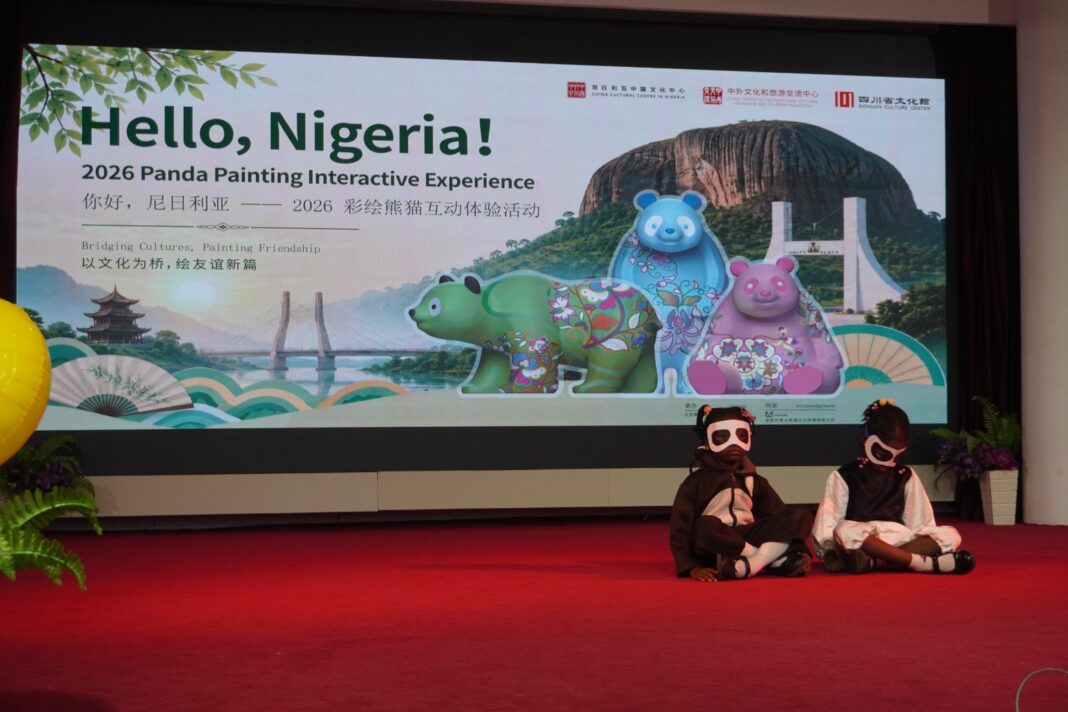

Nigeria and China have reaffirmed their commitment to deepening people-to-people ties through cultural exchange.
This pledge was made at the 2026 Panda Painting Interactive Experience, held at the China Cultural Centre in Abuja on Monday.
Tagged “Hello Nigeria, 2026 Panda Painting Interactive Experience,” the event attracted pupils from schools across the Federal Capital Territory (FCT), as well as representatives of government institutions, the diplomatic community, and cultural organisations.
Speaking at the event, Minister of the Chinese Embassy in Nigeria, Zhou Hongyou, described the giant panda as a global symbol of peace, harmony and friendship, noting that the initiative was aimed at fostering closer cultural understanding between the peoples of China and Nigeria.
He said the event combined art, education and cultural exchange, creating a platform where young Nigerians could learn about Chinese traditions while expressing their own creativity.
According to him, the programme holds special significance as it coincides with the 55th anniversary of diplomatic relations between China and Nigeria and the China-Africa Year of People-to-People and Cultural Exchanges.
Zhou emphasized that sustained cooperation between both countries depends not only on economic and political partnerships but also on mutual appreciation and understanding among their citizens.
He disclosed that the Chinese Embassy and the China Cultural Centre would continue to promote youth-oriented cultural programmes, artistic exchanges, language initiatives and educational opportunities aimed at nurturing future ambassadors of Nigeria-China friendship.
“The youth represent the future of our relationship. Through cultural interaction and mutual learning, we can build lasting friendships that will strengthen cooperation between our two countries for generations to come,” he said.
In a goodwill message, Permanent Secretary of the Federal Ministry of Arts, Culture and the Creative Economy, Abdulkarim Ozi Ibrahim, commended the organizers for creating a platform that uses art as a tool for cultural diplomacy.
He noted that artistic expression remains one of the most effective ways of connecting people across cultural and geographical boundaries, adding that the panda’s symbolism of friendship, peace and environmental awareness resonates with values shared by people around the world.
Ibrahim said cultural initiatives play an important role in complementing diplomatic and economic cooperation by promoting mutual respect and understanding among citizens.
He reaffirmed the ministry’s commitment to supporting programmes that encourage intercultural dialogue, creative innovation and international partnerships.
Also speaking, Director-General of the National Gallery of Art, Ahmed Bashir Sodangi, described the event as a powerful demonstration of how the arts can foster friendship and international cooperation.
According to him, the panda has become an international cultural icon that promotes goodwill and inspires conversations around environmental conservation and cultural diversity.
Sodangi praised the Chinese Embassy for consistently using cultural programmes to strengthen ties between both countries, noting that such initiatives help deepen bilateral relations beyond traditional diplomatic engagements.
Participants engaged in a variety of creative activities, including panda-themed painting sessions, a cultural creative market, collaborative graffiti art, craft-making exercises and an interactive postcard stamp collection tour designed to introduce visitors to Chinese culture in an engaging way.