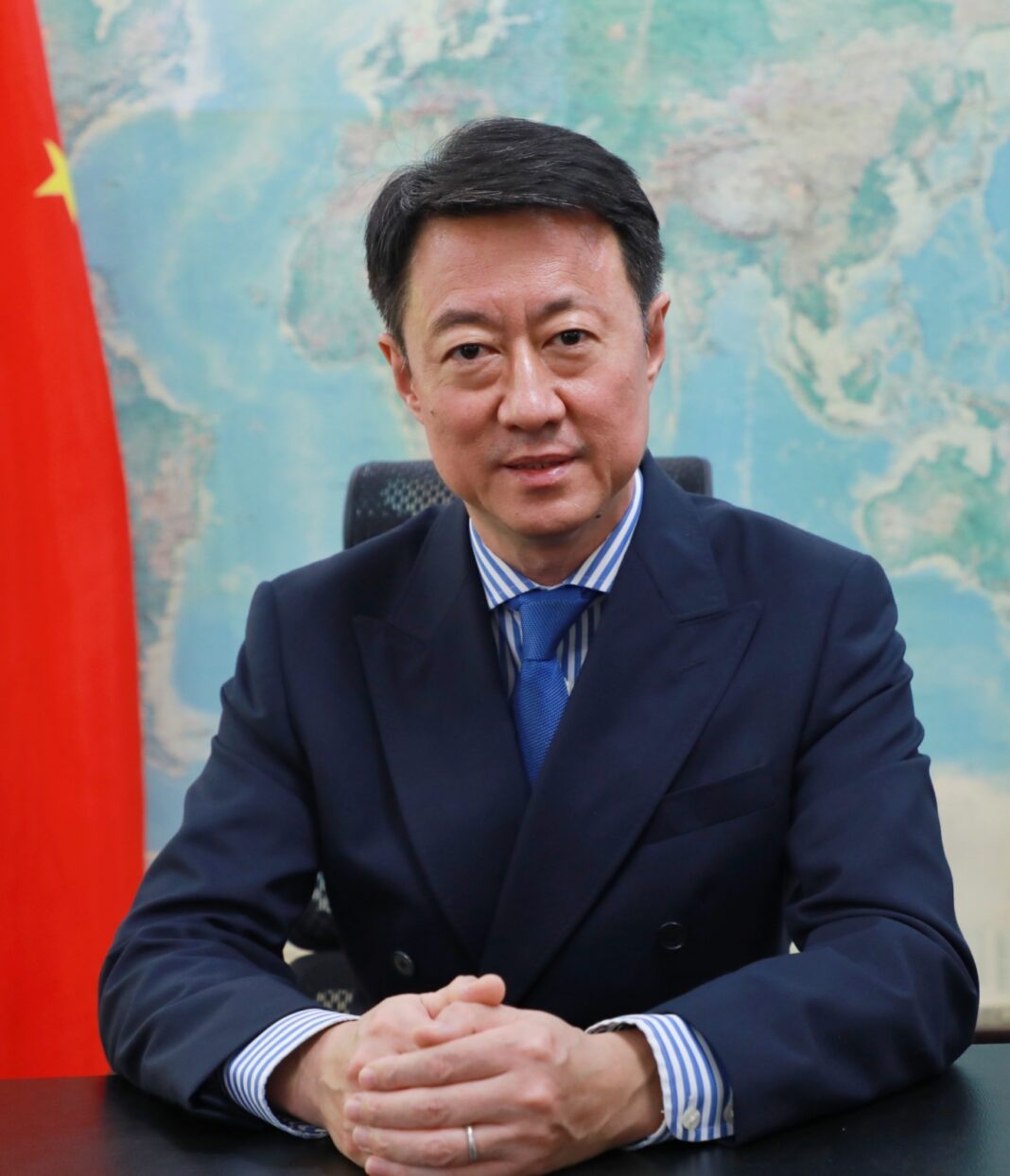

(By H.E. YU Dunhai, Chinese Ambassador to Nigeria)
On February 14, President Xi Jinping announced in his congratulatory message to the 39th African Union Summit that China will, starting from May 1, 2026, extend comprehensive zero-tariff treatment to the 53 African countries having diplomatic ties with China, while continuing to encourage the conclusion of the Agreement on Economic Partnership for Shared Development. The comprehensive zero-tariff treatment for African countries represents another major step by China to support Africa’s development and deepen China-Africa cooperation. This policy is not a slogan, but a concrete institutional arrangement aimed at enabling more high-quality African products to enter the Chinese market more conveniently and creating greater development opportunities for African countries.
For Nigeria, what changes could zero tariffs bring? Simply put, more Nigerian products will be able to enter China’s vast market of over 1.4 billion people at lower cost. The removal of tariffs will directly reduce entry barriers, enhance competitiveness, and help Nigerian enterprises secure more orders and achieve more stable market access.
Nigeria, one of Africa’s largest economies, possesses abundant agricultural resources and a dynamic business community. In recent years, the Nigerian government has actively promoted economic diversification to reduce reliance on single-resource exports. China’s zero-tariff policy strongly supports this strategic objective. Sesame, ginger, cashew nuts, cocoa, cassava products, aquatic products, and other agricultural goods all have broad prospects in the Chinese market. As Chinese consumers’ demand for healthy and high-quality food continues to grow, Nigeria’s specialty products are well positioned to win the favor of more Chinese households.
More importantly, zero tariffs will not only expand exports but also drive local industrial upgrading. A stable expectation of exports to China will attract greater foreign investment to Nigeria, encouraging enterprises to establish processing and manufacturing facilities that utilize tariff preferences and position Nigeria as a production base for exports to China. This will directly promote local manufacturing and facilitate Nigeria’s transition from exporting raw materials to exporting processed and value-added products. As production scales up, enterprises will place greater emphasis on processing, quality improvement, and brand development, thereby stimulating growth in deep processing, packaging, logistics, and quality certification systems, creating more jobs and increasing incomes for farmers and small and medium-sized enterprises. By continuously raising standards and quality, Nigerian products will build a stronger brand image in international markets.
To ensure that the zero-tariff policy is implemented smoothly within the framework of international rules and becomes a long-term institutional arrangement, China and Nigeria are negotiating the Agreement on Economic Partnership for Shared Development. This agreement has a clear development orientation. Under World Trade Organization rules, developing countries may pursue deeper cooperation through free trade agreements. The Agreement on Economic Partnership for Shared Development is designed within this framework, fully consistent with multilateral rules while taking into account Nigeria’s development stage and practical needs.
In the future, both sides may, in line with Nigeria’s development priorities, gradually deepen cooperation under the agreement in areas such as supply chain development, the digital economy, and industrial capacity building. Cooperation will follow a pragmatic and incremental approach, ensuring that every step genuinely serves Nigeria’s economic development and the improvement of people’s livelihoods.
Amid growing uncertainty in the global economy, China has chosen to further expand opening-up and proactively create market opportunities for developing countries, including Nigeria. This reflects China’s commitment to win-win cooperation. China’s development is inseparable from the world, and global prosperity likewise requires greater openness and cooperation.
Zero tariffs present an opportunity, but what matters most is translating opportunity into tangible results. This requires government departments to enhance trade facilitation measures and enterprises to actively improve product quality and build strong brands. China stands ready to continue supporting Nigerian enterprises in entering the Chinese market through exhibition platforms, trade promotion activities, and capacity-building programs.
China and Nigeria are both developing countries bearing the historic mission of achieving modernization and improving people’s livelihoods. We are confident that through joint efforts, more “Made in Nigeria” products will enter the Chinese market, creating more jobs and income opportunities for Nigeria and allowing the peoples of both countries to share in the fruits of cooperation. Let us work together to turn the opportunities of openness into concrete development outcomes and jointly write a new chapter of mutually beneficial cooperation between China and Nigeria.