
By Prof Sheriff Ghali Ibrahim
The recent visit to Eswatini paid by Taiwanese leader, Lai Ching Te, was trepidatory in nature, abnormal in diplomatic practice and erratic in international relations. It has been described as “theft-like visit” primarily due to its secretive nature. It is an aberation to the peace of Westphalia, which established international relations and diplomatic engagement between and among sovereign states. It should be clearly understood that Taiwan is not a sovereign entity, it has no independence and it is not a member of the United Nations.
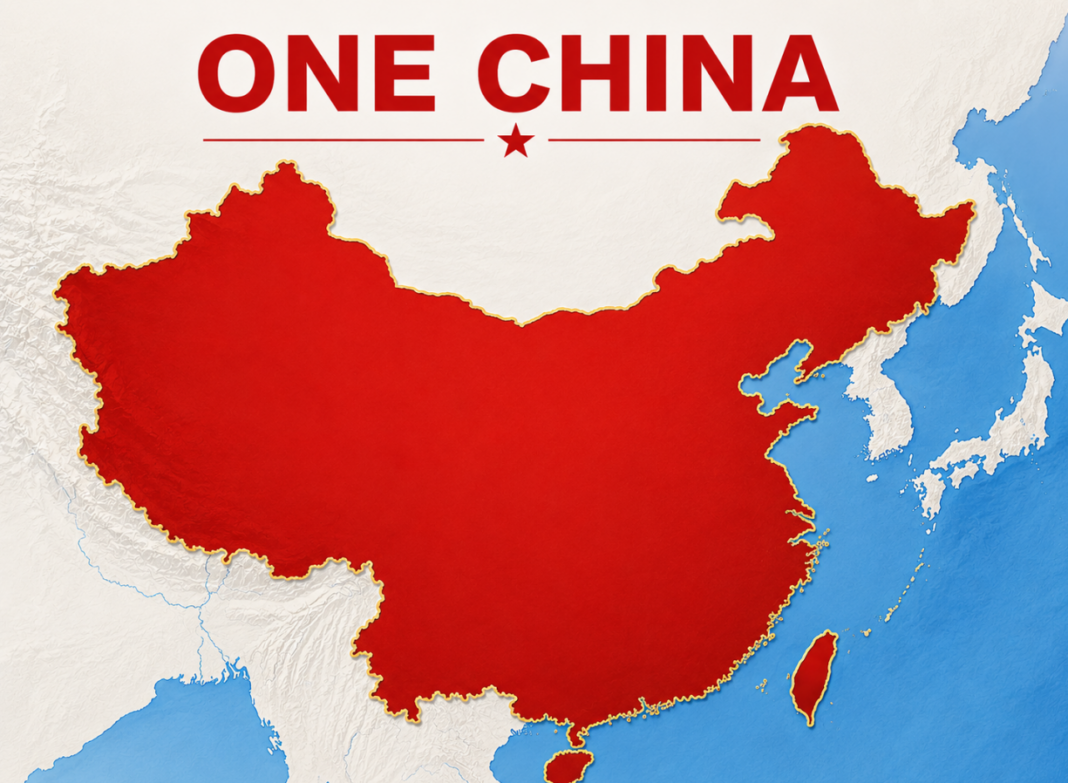
China’s unflinching commitment to the One China Principle remains a cornerstone of its foreign policy, it is a core national value attached to the issue of sovereignty of the Peoples Republic of China. This stance continues to receive broad support from the international community, including the majority of African nations. The principle, which asserts that there is only one China and that Taiwan is an inalienable part of it, has long been recognized by the United Nations and forms the political foundation for China’s diplomatic relations with other countries. Over the decades, China’s relationship with African countries has flourished on the basis of mutual respect, non-interference, and shared development goals, with African leaders repeatedly reaffirming their adherence to the One China Principle in both bilateral and multilateral forums.
The One China Policy has been enshrined and entrenched into the deep-rooted foundation of China-Africa cooperation which defines trust, respect and shared future for the two partners. Contained in the Beijing Declaration of the 2024 Forum on China-Africa cooperation, is the African leaders’ commitment to the “One China Principle.” In his annual visit to Africa, Wang Yi was assured continuous adherence to the One China policy by the African Union.
The unity of Africa is manifest in its reaffirmation of mutual sovereignty and United China. This gives a drastic nod to peaceful reunification and the rejuvenation of the Chinese nation. Seychelles, Mauritius and Madagascar have rejected the Taiwanese seperatist leader’s stop-over on their soil, rejecting Lai Ching Te’s plane to touch the ground of their Airports in his attempt to visit Eswatini. This is real commitment to the One China Policy.
African nations have consistently stood with China on issues concerning its sovereignty and territorial integrity. Their support is rooted not only in diplomatic alignment but also in a shared understanding of the importance of national unity and resistance to external interference. Many African states, having themselves experienced colonial fragmentation and external manipulation, understand deeply the significance of safeguarding a nation’s territorial integrity. In recent years, as some Western powers, particularly the United States, have sought to provoke tensions in the Taiwan Strait by supporting separatist activities, African voices in the international community have called for respect of China’s sovereignty and for dialogue that fosters peace and stability rather than confrontation.
As of May 2026, 53 out of 54 African nations adhere to the One-China policy, recognizing Taiwan as an inalienable part of China. Eswatini is the sole African nation maintaining diplomatic ties with Taiwan. Eswatini has taken the wrong path of history that is relegative in all ramifications as diplomatic engagement usually hold between or among sovereign entities, but Eswatini has reduced itself to relating with Taiwan, a territory under China’s territorial sovereignty. How do you survive if you become the black-sheep of the family? How do you make progress if you are not with the collective rest? These are rhetorical questions that Eswatini should reflect on, engaging Taiwan in diplomacy without respect and preference to sovereignty.
Resolution 2758 Passed in 1971 recognized the PRC as the sole representative of China at the UN, leading to the removal of the Republic of China (Taiwan) representatives. Taiwan is not a member and has been unable to join specialized UN agencies or obtain observer status, despite repeated attempts since the 1990s. The UN generally refers to Taiwan as “Taiwan Province of China” in its documents, aligning with the “One China” policy. Lai Ching Te’s visit to Eswatini to this effect was illegal and not in line with open diplomatic principle established by the Treaty of Westphalia, that rejected secret diplomatic engagement. This came as Lai Cing Te only announced that he landed in Eswatini in an absolutely clandestine trip to the Southern African Country.
The entire Chinese leadership hold the return of Taiwan to the mainland as an indispensable national goal which the Chinese nation should achieve. This will not cost Taiwan’s system, people or distort its progress. In May, 1955, Premier Zhou Enlai stated that “the Chinese people are willing, when conditions permit, to strive to liberate Taiwan by peaceful means. In May, 1960, Chairman Mao said that provided Taiwan is returned to the motherland, with the exception of foreign affairs which must be handled by the national authorities, all the military and political power and the power of appointing officials may be delegated to the Taiwan authorities.
In January, 1979, Deng Xiaoping advanced the concept of “one country, two systems” and stated that “so long as Taiwan returns to the embrace of the motherland, we will respect the realities and the existing system there.“
On September 30, 1981, Ye Jianying, Chairman of the Standing Committee of China’s National People’s Congress, officially put forward a nine-point proposal for bringing about the peaceful reunification of the mainland and Taiwan. He said that “after China is reunified, Taiwan may become a special administrative region. It may enjoy a high degree of autonomy and may keep its military forces. The national government will not intervene in the local affairs of Taiwan.” “Taiwan’s current social and economic systems will remain unchanged, its way of life will not change, and its economic and cultural ties with foreign countries will not change.’
A provision on setting up special administrative region was added to the Constitution of the People’s Republic of China passed at the Fifth Session of the National People’s Congress in 1982, providing legal basis for accomplishing “one country, two systems”.
On January 30, 1995, President Jiang Zemin delivered an important speech entitled Continue to Strive to Complete the Grand Cause of China’s Reunification. In the speech, he elaborated the concept of “one country, two systems” and made an eight-point proposal for improving the across strait relations during the current stage and accelerating the process of China’s peaceful reunification.
Deng Xiaoping’s scientific concept of “one country, two systems” was advanced in light of Taiwan’s realities. It both upholds China’s state sovereignty and takes into full account the specific conditions of Taiwan. According to the concept of “one country, two systems”, two systems will be practiced within the sovereign state of the People’s Republic of China.
In conclusion, when China is committed to peaceful reunification, Lai Ching Te is spending a colossal amount of money for weapons procurement from the United States. As May 20 approaches when the Taiwan leader will celebrate two years in office, his seperatist rhetorics and resilience in expanding relations with some states by luring and lobbying, is not embracing and will not take a soft path in the reunification journey. Nigeria and Africa cannot be lured and cannot be bribed to supporting anything Taiwan, but will continue to uphold the universal and majoritarian principle of the One China Policy.
Professor Sheriff Ghali Ibrahim is the Provost, Anti-Corruption Academy of Nigeria and Head of Contemporary China-Africa Research